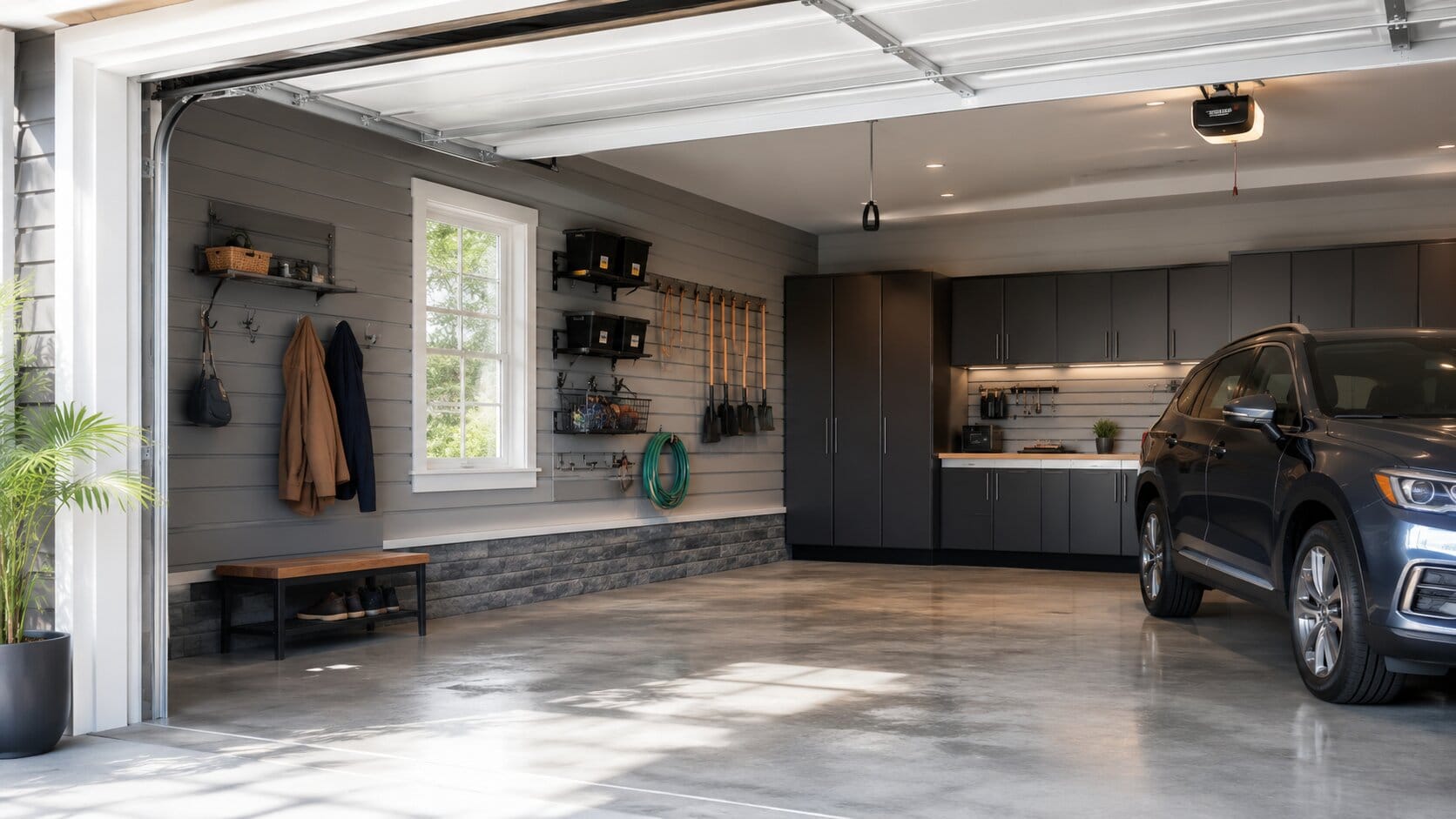
Garage wall paneling can make a garage cleaner, stronger, and easier to use. It can improve storage, protect walls from impact, hide rough surfaces, support tools, and create a finished look.
However, garage walls are different from ordinary interior walls. A garage may face moisture, vehicle exhaust, temperature swings, tools, chemicals, pests, impact, and code requirements. An attached garage also has safety concerns because it connects to the living space.
The best garage wall paneling depends on how you use the garage. A clean parking garage needs a different wall system than a workshop, home gym, laundry zone, mudroom, or storage wall. Before choosing panels, you should consider fire separation, moisture, insulation, electrical access, load capacity, and local building rules.
This guide explains the best garage wall paneling ideas, compares common materials, and shows what to check before installation.
What Is Garage Wall Paneling?
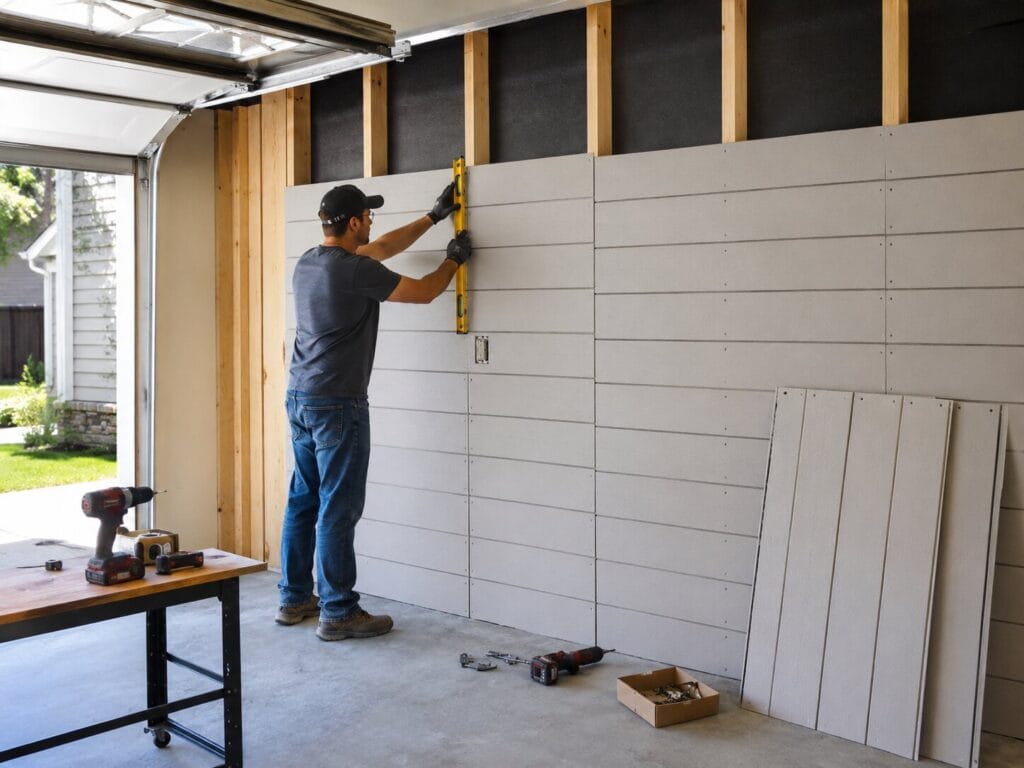
Garage wall paneling refers to any panel material installed on garage walls for protection, storage, organization, moisture resistance, insulation support, or appearance.
Garage wall panels may include:
- Drywall
- Plywood
- OSB
- Slatwall
- Pegboard
- PVC panels
- FRP panels
- Metal panels
- Fiber cement panels
- MDF panels
- Natural wood panels
- Decorative wall boards
- Lower wall protection panels
Some panels are mainly decorative. Others are designed for storage, impact resistance, moisture protection, or code compliance.
What Garage Wall Paneling Can Do
Garage wall paneling can help with several goals.
1. Improve Storage
Slatwall, pegboard, plywood, and reinforced panels can help organize tools, bikes, shelves, sports gear, extension cords, cleaning supplies, and lawn equipment.
Storage panels must be mounted correctly. Heavy items should connect to studs or structural backing, not just thin panel material.
2. Protect the Wall
Garages often take abuse from car doors, bikes, ladders, trash bins, tools, workbenches, and storage containers. Durable panels can protect the wall from dents, scratches, and impact.
3. Improve Appearance
Paneling can turn an unfinished garage into a cleaner, more polished space. Painted drywall, slatwall, PVC panels, wood panels, and metal panels can all create different styles.
4. Help With Moisture Resistance
Some panels resist water better than others. PVC, FRP, metal, and fiber cement can work well in moisture-prone areas when installed correctly.
However, panels do not fix leaks. You must solve the moisture source first.
5. Support Insulation and Air Sealing
Paneling can be part of a finished garage wall system, but insulation and air sealing must be planned before the wall is closed.
For attached garages, air sealing matters because pollutants from the garage should not move into the living space.
Important Safety Note for Attached Garages
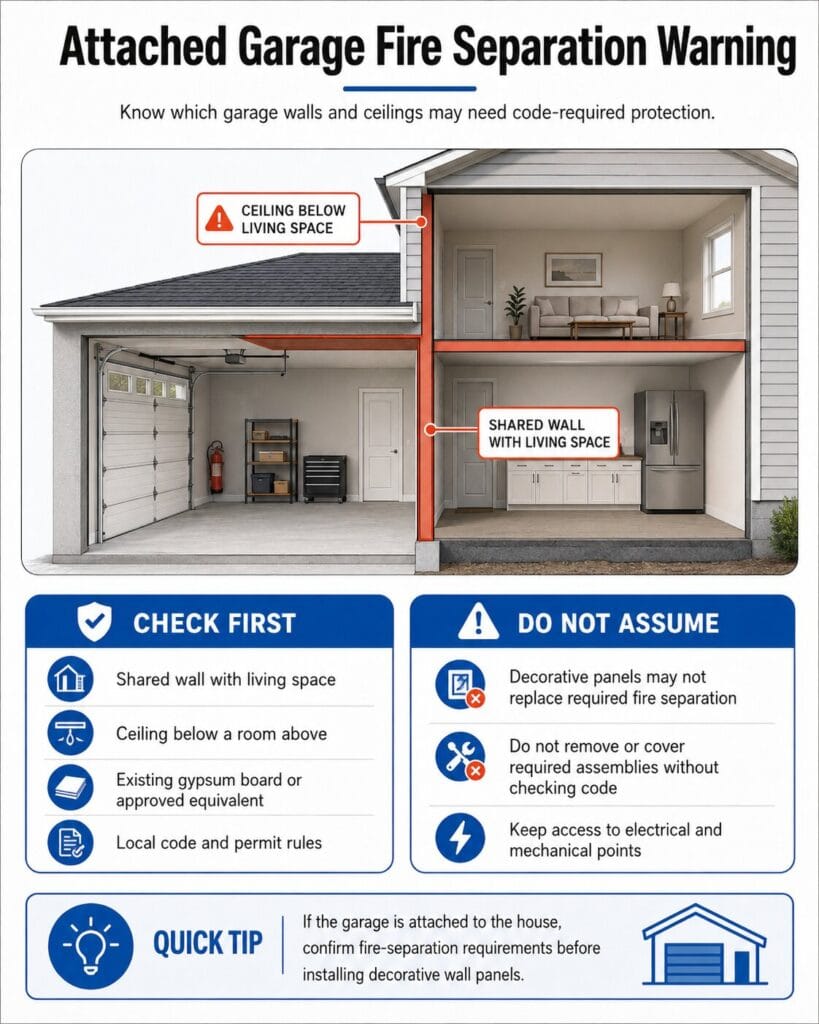
If your garage is attached to your house, do not cover, remove, or replace required fire-separation materials without checking local code.
In many U.S. homes, the wall between the garage and the living area needs gypsum board or an approved equivalent on the garage side. Ceilings below living space may have stricter requirements.
This matters because some decorative panels, wood panels, PVC panels, or storage systems may not replace code-required garage separation. In many cases, drywall or another approved material must remain in place first, then paneling can be installed over it if allowed.
Before installing garage wall panels on a shared wall, ask:
- Is this wall shared with living space?
- Is there a room above the garage?
- Is this wall part of required garage separation?
- Can this panel be installed over existing drywall?
- Does the panel have a fire rating?
- Does local code allow this material here?
- Will the panel cover required access points?
When in doubt, ask your local building department or a qualified contractor.
Attached Garage Air Sealing and Indoor Air Quality
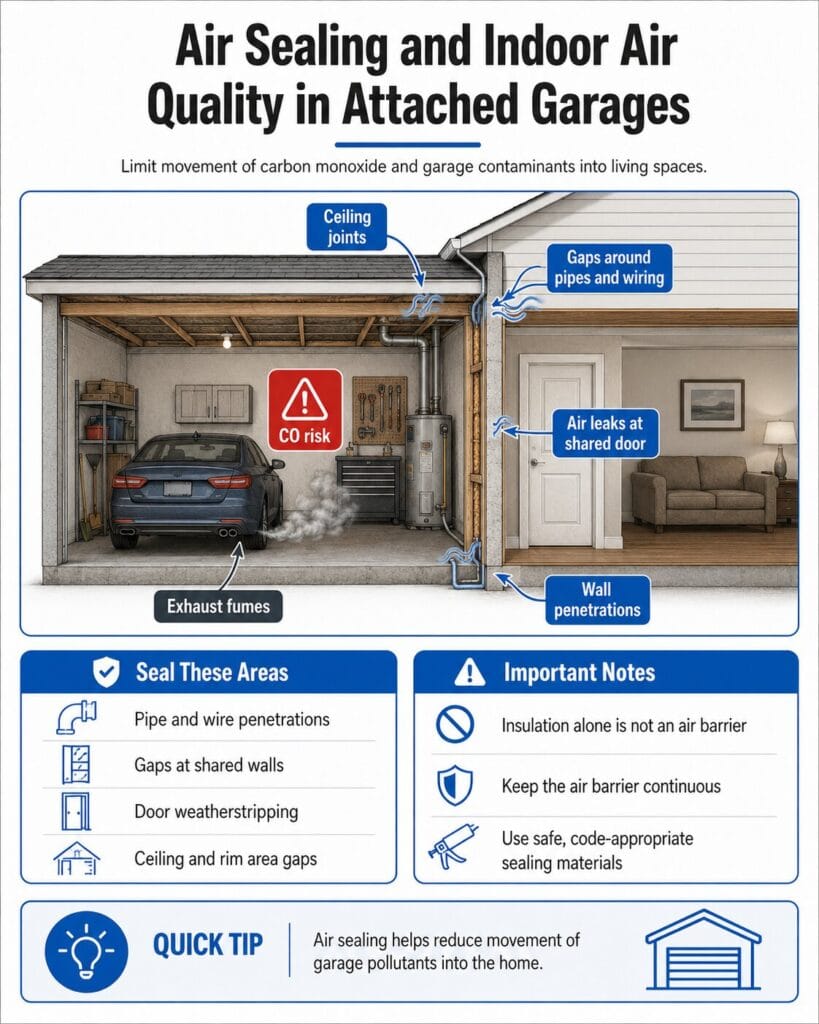
An attached garage can contain vehicle exhaust, carbon monoxide, gasoline fumes, paint, solvents, fertilizers, pesticides, and other contaminants. Wall paneling should not create hidden air leaks or cover gaps that should be sealed properly.
Before adding panels, inspect:
- Gaps around pipes
- Gaps around wiring
- Cracks at the shared wall
- Open framing bays
- Gaps around doors
- Gaps around ducts
- Ceiling penetrations
- Rim joist areas
- Holes around outlets and switches
Air sealing should use materials that match the location and code requirements. Do not use loose insulation as an air barrier. Insulation can slow heat transfer, but it does not stop air leakage by itself.
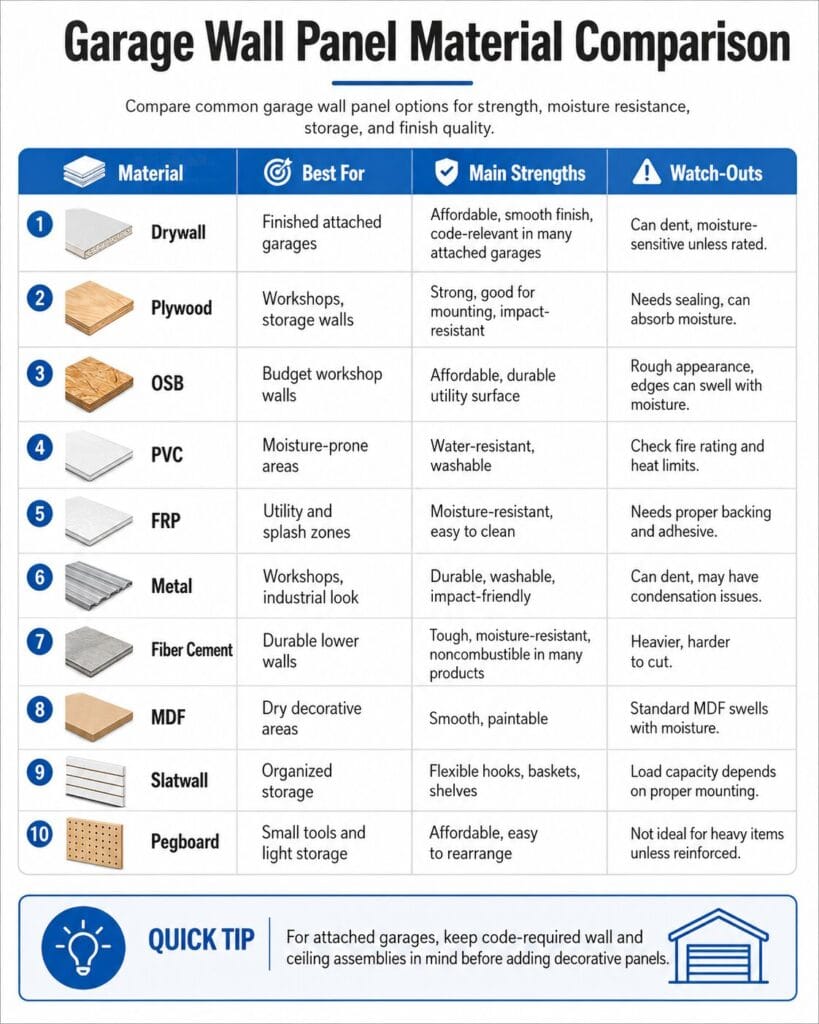
Best Garage Wall Paneling Materials Compared
| Material | Best For | Strengths | Watch Out For |
|---|---|---|---|
| Drywall | Finished attached garages, clean painted walls | Affordable, smooth, code-relevant in many attached garages | Can dent, needs paint, moisture-sensitive unless rated |
| Plywood | Workshops, storage walls, tool areas | Strong, good for mounting, impact-resistant | Needs sealing, can absorb moisture |
| OSB | Budget workshop walls, utility spaces | Affordable, stronger than thin decorative panels | Rough look, moisture-sensitive edges |
| Slatwall | Organized storage, tools, bins, sports gear | Flexible storage system, clean look | Load capacity depends on panel and mounting |
| Pegboard | Light tools, craft tools, small items | Affordable, easy to rearrange | Not ideal for heavy loads unless reinforced |
| PVC panels | Moisture-prone areas, washable walls | Water-resistant, easy to clean | Check fire rating, heat limits, and code use |
| FRP panels | Utility zones, wet or washable areas | Moisture-resistant, durable surface | Needs proper adhesive and backing |
| Metal panels | Workshops, modern garages, impact zones | Durable, washable, industrial look | Can dent, sharp edges, condensation risk |
| Fiber cement panels | Durable lower wall areas, impact-prone zones | Moisture-resistant, tough, noncombustible in many products | Heavier, harder to cut, dust precautions |
| MDF panels | Dry decorative areas, cabinets, light-duty finished walls | Smooth finish, paintable | Standard MDF is not good for moisture |
| Natural wood panels | Warm finished garage style | Attractive, customizable | Needs sealing, may not suit fire-separation walls |
Drywall for Garage Walls
Drywall is one of the most common garage wall finishes. It gives a clean surface and can be painted any color. In attached garages, drywall may also be part of the required separation between the garage and the dwelling.
Best for:
- Attached garages
- Painted finished garages
- Budget wall finishing
- Walls that need a smooth surface
- Garages connected to living space
Watch out for:
Drywall can dent, absorb moisture, and break from impact. If your garage gets wet or humid, use the right drywall type and paint system. Do not replace required garage drywall with decorative panels unless code allows it.
Plywood Garage Wall Panels
Plywood is a strong option for workshops and storage walls. It works well when you need to mount hooks, cabinets, shelves, or tool racks.
Best for:
- Workshops
- Tool walls
- Heavy storage zones
- Utility garages
- Workbench walls
Watch out for:
Plywood can absorb moisture if not sealed. Leave proper clearance from the concrete slab in damp garages. Use the correct thickness and fasten panels to studs.
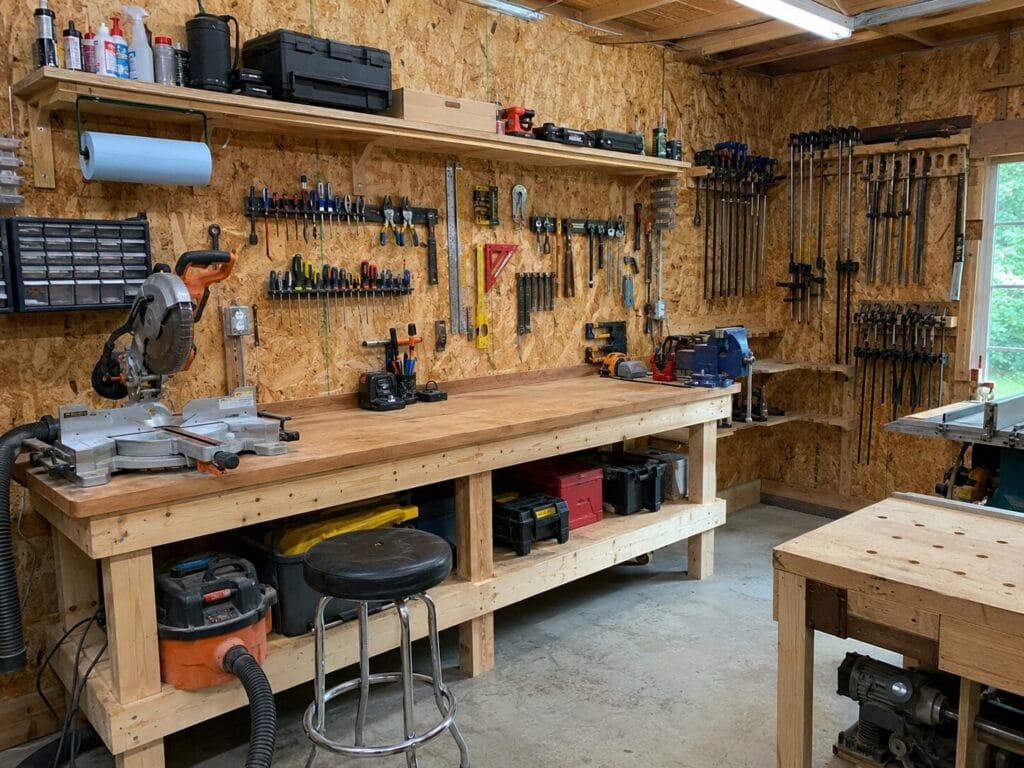
OSB Garage Wall Panels
OSB is a budget-friendly panel option for utility garages and workshops. It can handle more impact than drywall and can support light to moderate mounting when installed correctly.
Best for:
- Budget workshop walls
- Storage garages
- Utility areas
- Detached garages
Watch out for:
OSB edges can swell when exposed to moisture. It also has a rough appearance unless painted or sealed. It may not be the best choice for a clean finished garage.
Slatwall Panels
Slatwall is one of the best options for garage organization. It uses horizontal grooves that accept hooks, baskets, shelves, and brackets.
Best for:
- Storage walls
- Sports equipment
- Garden tools
- Cleaning supplies
- Bikes and accessories
- Organized family garages
Watch out for:
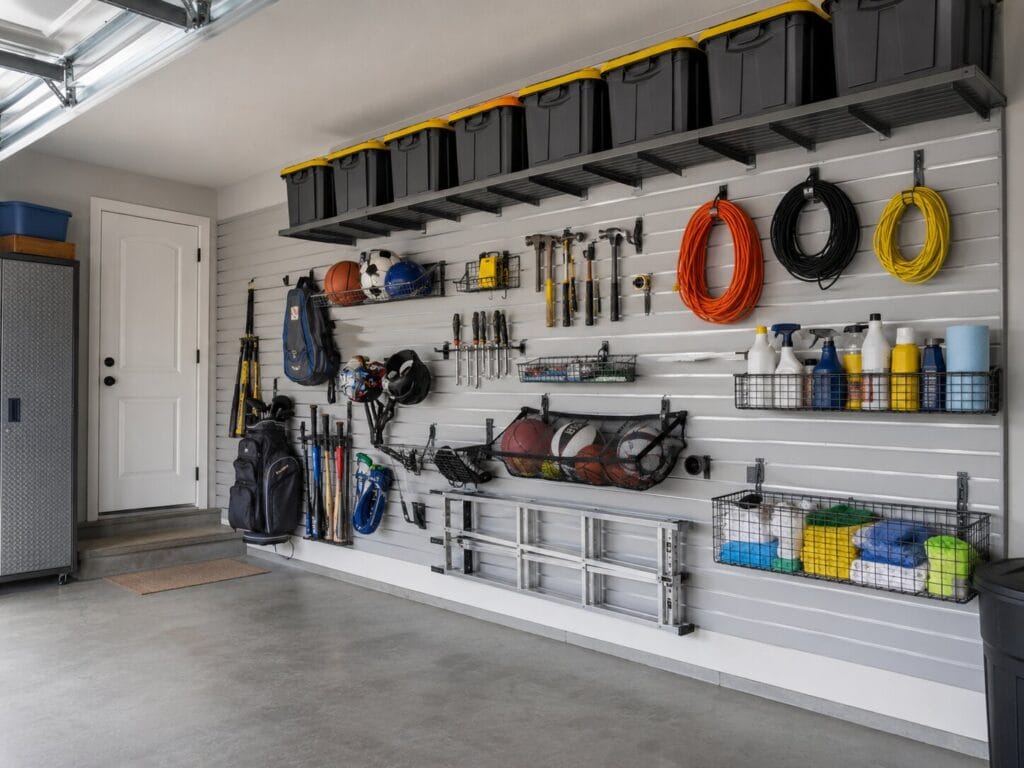
Slatwall load capacity depends on the panel material, hook system, stud connection, and fastening method. Heavy items should be mounted according to the manufacturer’s instructions.
Do not assume every slatwall panel can hold ladders, tires, bicycles, or loaded cabinets.
Pegboard Panels
Pegboard is a simple and affordable way to organize small tools. It works well above a workbench or hobby area.
Best for:
- Hand tools
- Craft supplies
- Small workshop items
- Lightweight organization
- Budget storage
Watch out for:
Standard pegboard is not ideal for heavy tools unless it has proper backing and strong mounting. Leave space behind the board so hooks can fit properly.
PVC Garage Wall Panels
PVC panels can be useful in garages that need washable, water-resistant surfaces. They can work well near utility sinks, laundry zones, or areas exposed to splashes.
Best for:
- Moisture-prone areas
- Washable wall surfaces
- Utility zones
- Clean finished garages
Watch out for:
PVC is not the right choice for every wall. Check manufacturer fire ratings, heat limits, and installation instructions. Do not use PVC panels to replace required fire-separation materials unless the product and local code allow it.
FRP Panels
FRP, or fiberglass-reinforced plastic panels, are often used in utility and commercial spaces because they are durable and easy to clean.
Best for:
- Laundry areas
- Utility sinks
- Wet zones
- Mudroom-style garage areas
- Washable lower walls
Watch out for:
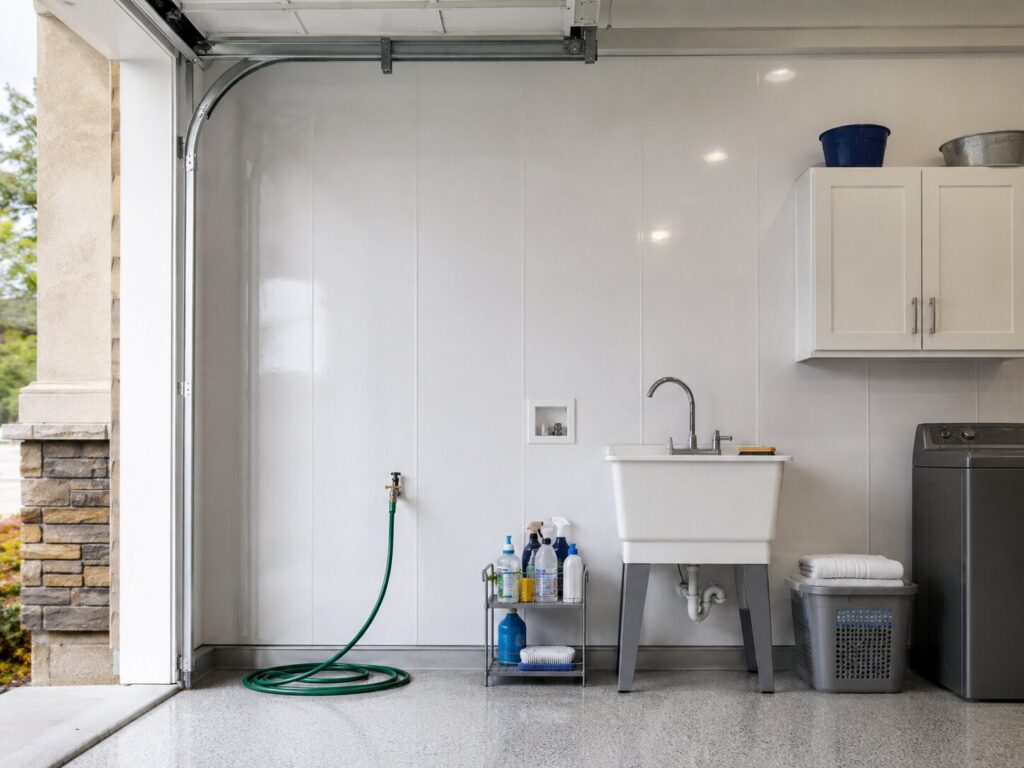
FRP usually needs a suitable backing surface and proper adhesive. It is not always the best full-wall decorative choice, but it can be excellent in splash-prone zones.
Metal Wall Panels
Metal panels can create a modern, industrial, and durable garage wall. They can handle moisture better than wood-based panels in some conditions.
Best for:
- Workshops
- Industrial-style garages
- Utility garages
- Impact-prone areas
- Washable surfaces
Watch out for:
Metal can dent and may create sharp edges if cut poorly. It can also create condensation issues in some climates if the wall assembly is not planned correctly.
Fiber Cement Panels
Fiber cement panels are strong, durable, and more moisture-resistant than many wood-based materials. They can work well in lower wall areas or high-impact zones.
Best for:
- Durable lower walls
- Moisture-prone areas
- Impact protection
- Utility garages
Watch out for:
Fiber cement is heavier and harder to cut than many panels. Cutting can create dust, so follow safety instructions and manufacturer guidance.
MDF Panels
MDF can create a smooth painted surface, but it is not ideal for most damp garages.
Best for:
- Dry garages
- Decorative panels
- Cabinet faces
- Light-duty finished areas
Watch out for:
Standard MDF can swell when exposed to moisture. Moisture-resistant MDF is better than standard MDF, but it is not the same as waterproof. Do not use MDF near wet floors, leaks, or unconditioned damp zones without proper protection.
Natural Wood Paneling
Wood paneling can make a garage feel warmer and more finished. It can work well in hobby garages, clean storage rooms, and detached garages.
Best for:
- Decorative finished garages
- Hobby spaces
- Rustic or warm design
- Feature walls
Watch out for:
Wood needs sealing or finishing. It may not be appropriate over required garage separation without code review. It can also absorb moisture and may not perform well near wet slabs.
Best Paneling by Garage Use
| Garage Use | Best Panel Options |
| Clean parking garage | Painted drywall, PVC panels, slatwall zones |
| Attached garage shared with house | Code-compliant gypsum board first, then approved finish if allowed |
| Workshop | Plywood, OSB, metal panels, pegboard, slatwall |
| Heavy storage wall | Slatwall rated for load, plywood backing, studs |
| Moisture-prone garage | PVC, FRP, fiber cement, sealed plywood in dry zones |
| Home gym | Painted drywall, PVC panels, plywood backing for equipment zones |
| Laundry or utility area | FRP, PVC, moisture-resistant drywall, washable paint |
| Mudroom-style garage entry | Durable lower panels, hooks, slatwall, rubber base |
| Budget finish | Painted drywall, OSB, plywood |
| High-end finished garage | Drywall, slatwall, PVC panels, metal accents, cabinetry |
Moisture Comes First
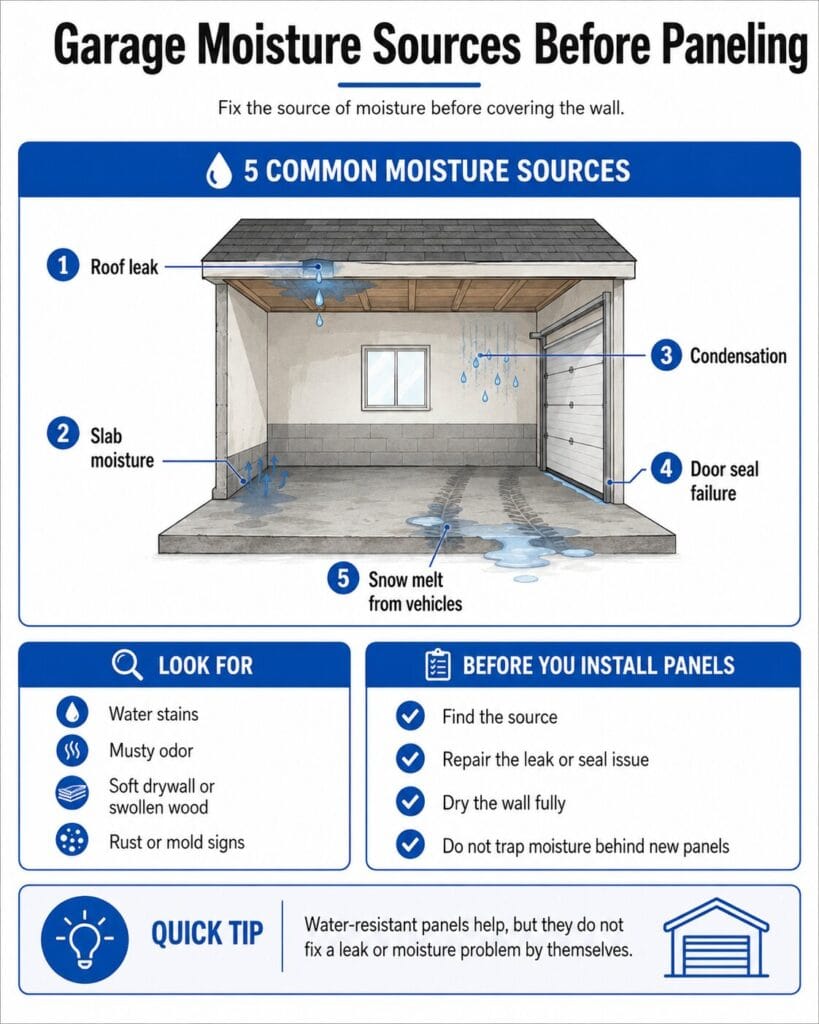
Before installing paneling, find out whether your garage has a moisture problem.
Common moisture sources include:
- Roof leaks
- Wall leaks
- Foundation cracks
- Poor exterior grading
- Slab moisture
- Condensation
- Garage door seal failure
- Snow melt from vehicles
- Utility sink splashes
- Laundry moisture
- Plumbing leaks
- High indoor humidity
Do not cover a wet wall with paneling and hope the problem disappears. New panels can trap moisture and hide damage.
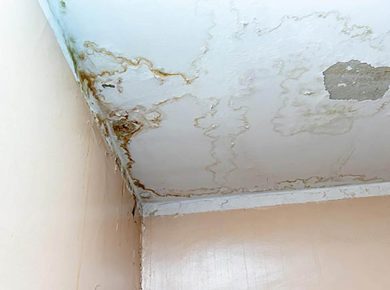
Signs of Moisture Problems
Look for:
- Water stains
- Mold smell
- Peeling paint
- Soft drywall
- Swollen MDF or particleboard
- Rusted fasteners
- Efflorescence on concrete
- Damp baseboards
- Condensation on metal surfaces
- Musty odor
Fix the water source before adding new wall panels.
Lower Wall Protection and Baseboard Details
The lower part of garage walls takes the most damage. It may face water, mud, road salt, tools, bins, bikes, and car doors.
Good lower wall protection options include:
- PVC baseboard
- Rubber base
- Vinyl base
- FRP lower wall panels
- Fiber cement lower panels
- Metal kick plates
- Sealed plywood lower panels
- Raised panel edges
Avoid letting MDF, particleboard, untreated wood, or OSB sit directly on a damp concrete slab. Leave a small clearance where appropriate and seal exposed edges.
Storage Load Capacity: Do Not Guess
Garage wall storage can fail if panels are not mounted correctly.
Before hanging heavy items, check:
- Stud spacing
- Panel thickness
- Fastener type
- Manufacturer load rating
- Hook rating
- Bracket rating
- Weight distribution
- Wall condition
- Whether the panel is mounted to studs
- Whether blocking or backing is needed
Heavy items may include:
- Bicycles
- Ladders
- Tires
- Cabinets
- Loaded bins
- Power tools
- Yard equipment
- Sports gear
For heavy loads, fasten into studs or install structural backing. Do not rely only on drywall anchors or thin decorative panels.
Insulation Behind Garage Wall Panels
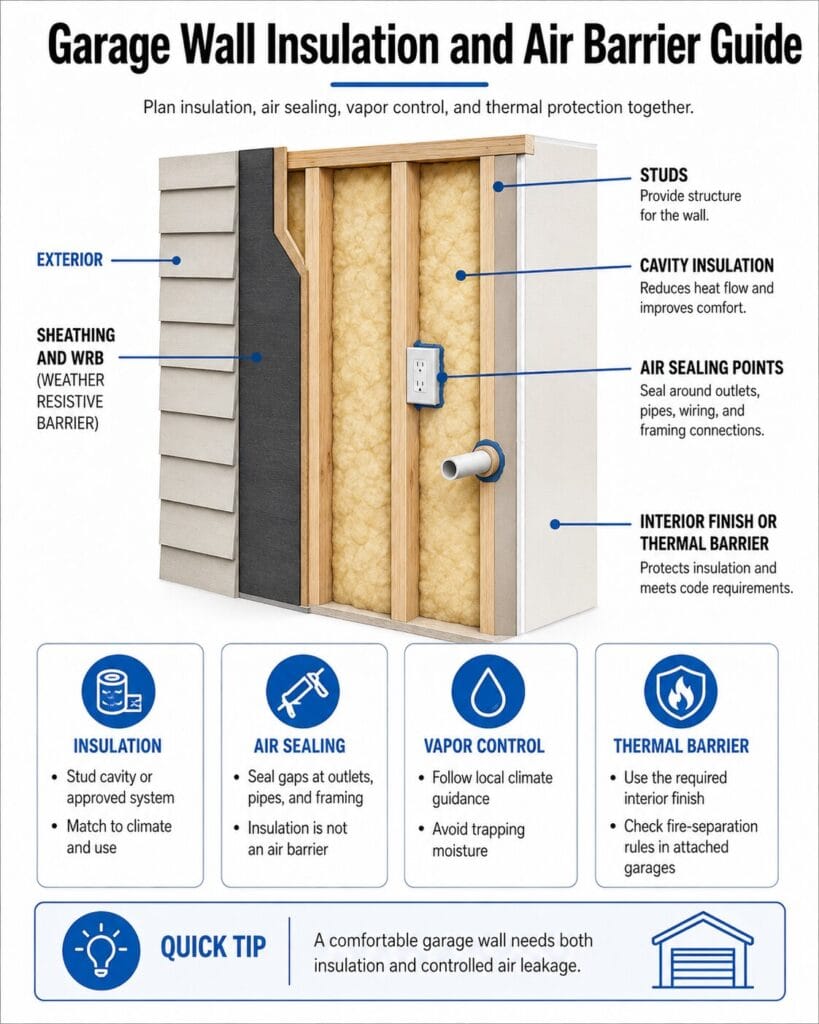
If you want a more comfortable garage, plan insulation before installing wall panels.
Important questions:
- Is the garage attached or detached?
- Is there living space above the garage?
- Is the garage conditioned or unconditioned?
- What climate zone are you in?
- Are the walls already insulated?
- Is the garage door insulated?
- Are air leaks sealed?
- Is a vapor retarder needed?
- Does the wall need fire separation?
- Will the insulation be covered by an approved interior finish?
Insulation works best with air sealing. If air leaks remain, insulation alone will not solve comfort, odor, or pollutant issues.
Electrical Safety Before Paneling
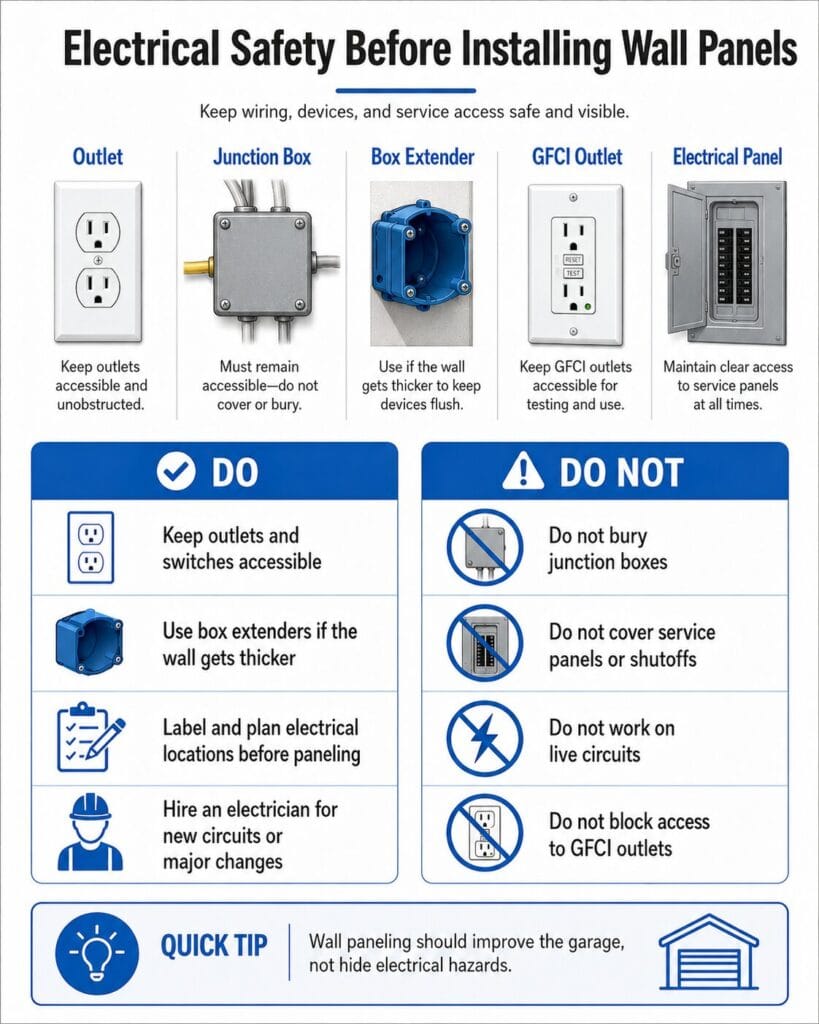
Garage wall paneling can interfere with electrical boxes, outlets, switches, conduit, lights, and wiring. Plan electrical access before installation.
Follow these rules:
- Do not cover junction boxes behind permanent panels.
- Do not bury outlets or switches behind paneling.
- Use proper box extenders when panel thickness changes wall depth.
- Keep electrical panels accessible.
- Keep GFCI outlets accessible.
- Do not cover disconnects, shutoffs, or service equipment.
- Turn off power before working near electrical devices.
- Hire an electrician for new circuits, outlet relocation, EV charger wiring, or major changes.
Paneling should make the garage better, not create hidden electrical hazards.
Clearance Around Mechanical Equipment
Many garages contain water heaters, furnaces, electrical panels, gas lines, shutoff valves, utility meters, or mechanical equipment.
Before adding panels, check clearance around:
- Electrical panels
- Water heaters
- Furnaces
- Gas shutoff valves
- Water shutoff valves
- Cleanouts
- Dryer vents
- HVAC equipment
- EV chargers
- Utility meters
Do not block access. Do not place combustible materials too close to heat-producing equipment. Follow equipment manuals and local code.
Painting Garage Wall Panels
Different materials need different paint preparation.
Drywall
Use drywall primer before painting. Choose washable paint for garages that collect dust or fingerprints.
Plywood
Use a suitable primer. Seal edges to reduce moisture absorption.
OSB
Prime well if painting. OSB texture may remain visible.
MDF
Seal edges carefully. MDF edges absorb paint heavily and can swell if exposed to moisture.
PVC
Paint only if the manufacturer allows it. Some PVC panels are not designed to be painted.
Metal
Use the right primer for the metal type if painting is needed. Address rust before painting.
Fiber Cement
Follow the manufacturer’s primer and paint instructions.
Installation Checklist Before You Start
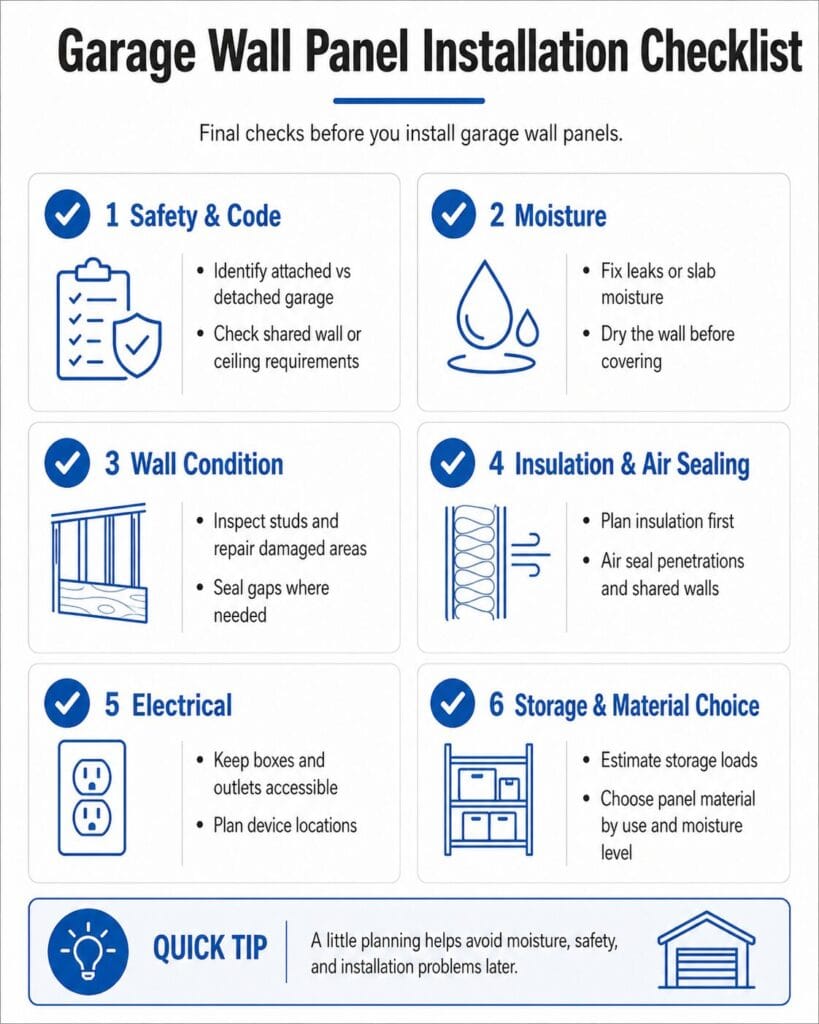
Use this checklist before installing garage wall paneling.
Safety and Code
- Confirm whether the garage is attached or detached.
- Identify shared walls with living space.
- Check fire-separation requirements.
- Check whether the ceiling is below living space.
- Review local building rules.
- Ask whether permits are needed.
Moisture
- Check for leaks.
- Inspect the slab edge.
- Check garage door seals.
- Look for mold or musty odor.
- Fix exterior grading or drainage problems.
- Dry the wall before covering it.
Wall Condition
- Check studs.
- Check drywall condition.
- Repair damaged wall areas.
- Remove loose paint.
- Check for pests.
- Seal gaps where needed.
Insulation and Air Sealing
- Decide whether insulation is needed.
- Air seal shared walls and penetrations.
- Do not use insulation as an air barrier.
- Check vapor control needs for your climate.
- Confirm the wall assembly can dry properly.
Electrical
- Mark outlets, switches, panels, and junction boxes.
- Keep boxes accessible.
- Use box extenders if needed.
- Plan new outlets before paneling.
- Hire an electrician when needed.
Storage
- Decide what you will hang.
- Estimate weight.
- Locate studs.
- Add blocking for heavy items.
- Follow slatwall or pegboard load ratings.
Material Selection
- Choose material by use, not just appearance.
- Match material to moisture exposure.
- Check fire rating when needed.
- Check manufacturer instructions.
- Plan baseboard and lower wall protection.
Common Mistakes to Avoid
Mistake 1: Covering Required Garage Separation
Do not cover or replace code-required drywall or approved separation materials without checking local rules.
Mistake 2: Installing Panels Over Moisture Problems
Paneling can hide leaks and trap moisture. Fix water first.
Mistake 3: Using MDF in a Damp Garage
Standard MDF can swell and fail in humid or wet conditions.
Mistake 4: Hanging Heavy Items on Weak Panels
Storage panels must connect to studs or rated backing for heavy loads.
Mistake 5: Covering Electrical Boxes
Do not bury junction boxes, outlets, switches, or panels behind permanent wall paneling.
Mistake 6: Ignoring Air Sealing in Attached Garages
Air leaks can move pollutants from the garage into the home.
Mistake 7: Letting Wood Panels Touch Wet Concrete
Wood-based materials can absorb moisture from the slab. Use clearance and edge sealing where needed.
Mistake 8: Choosing Panels Only by Appearance
A garage wall system must match moisture, impact, storage, fire safety, and code needs.
Mistake 9: Blocking Mechanical Access
Do not cover shutoffs, cleanouts, electrical panels, furnaces, or water heaters.
Mistake 10: Assuming Waterproof Panels Fix the Wall
Waterproof panels may resist surface water, but they do not solve leaks, condensation, or drainage problems.
FAQ About Garage Wall Paneling
What is the best wall paneling for a garage?
The best option depends on your garage use. Drywall is common for finished attached garages. Plywood and OSB work well for workshops. Slatwall is best for organized storage. PVC and FRP work well in washable or moisture-prone areas.
Is drywall required in an attached garage?
Many attached garages need gypsum board or equivalent material between the garage and living space. Requirements vary by local code, so check before replacing or covering shared walls.
Can I install slatwall over drywall?
Yes, in many cases, but it must be fastened properly into studs or approved backing. Follow the manufacturer’s instructions and do not exceed load ratings.
Is PVC good for garage walls?
PVC can work well for washable and moisture-resistant wall areas. However, check fire rating, heat limits, and whether it is allowed on the wall you want to cover.
Can I use wood paneling in a garage?
Yes, but wood should be sealed and protected from moisture. In attached garages, check fire-separation rules before using wood on shared walls.
Is MDF good for garage walls?
Standard MDF is not ideal for damp garages. It can swell when exposed to moisture. Use it only in dry areas and protect the edges.
What is the cheapest way to finish garage walls?
Painted drywall, OSB, and plywood are common budget options. The cheapest choice depends on whether your garage is attached, detached, dry, humid, or used as a workshop.
What panels are best for a garage workshop?
Plywood, OSB, metal panels, pegboard, and slatwall are strong choices for workshops. Use studs or backing for heavy tools and shelves.
Can garage wall panels help with insulation?
Panels alone do not provide much insulation unless they are part of an insulated wall system. Plan insulation, air sealing, and vapor control before installing panels.
Should garage wall panels touch the concrete floor?
Wood-based panels should usually avoid direct contact with damp concrete. Leave clearance where appropriate and use moisture-resistant base protection.
What is best for moisture-prone garage walls?
PVC, FRP, fiber cement, and some metal panels can work well. First, fix leaks, slab moisture, or drainage problems.
Can I cover electrical outlets with wall panels?
No. Outlets, switches, junction boxes, electrical panels, and service equipment must remain accessible. Use proper box extenders if the panel changes wall thickness.
Do I need a permit to install garage wall paneling?
Simple decorative paneling may not require a permit, but electrical work, insulation changes, fire-separation changes, and structural modifications may require approval. Ask your local building department.
Is pegboard strong enough for garage tools?
Pegboard is good for light and medium hand tools. Heavy tools need stronger backing, better hooks, or a storage system rated for the load.
What is the best paneling for a finished garage?
For a clean finished garage, consider painted drywall, slatwall zones, PVC panels, FRP in utility areas, and durable lower wall protection.
Conclusion
Garage wall paneling can improve storage, durability, moisture resistance, and appearance. The right material can make a garage easier to clean, organize, and use every day.
However, the best choice depends on how the garage works. An attached garage needs special attention to fire separation, air sealing, and indoor air quality. A workshop needs stronger walls and better mounting. A moisture-prone garage needs leak control before new panels. A finished garage needs materials that look clean and perform well.
Before installing paneling, check the wall condition, moisture source, electrical access, insulation plan, fire-separation rules, and storage loads. Choose materials based on function first, then style.
A well-planned garage wall system can last for years. A poorly planned one can trap moisture, hide hazards, fail under storage loads, or violate code.
Sources:
- International Code Council, “IRC R302.6 Dwelling-Garage Separation”
Used for garage and dwelling separation requirements, including gypsum board or equivalent material on the garage side. (ICC Digital Codes) - Building America Solution Center, “Air Sealing Attached Garage”
Used for attached garage air sealing guidance and the need to help block carbon monoxide and other garage contaminants from entering the home. (Building America Solution Center) - U.S. Department of Energy, “Insulate and Air Seal Floors Over Unconditioned Garages”
Used for continuous air and thermal barrier guidance between unconditioned garages and conditioned living spaces. (The Department of Energy’s Energy.gov) - Building America Solution Center, “Air Sealing and Insulating Garage Walls”
Used for code-compliance context on air sealing and insulating garage walls, especially in attached garages. (Building America Solution Center)

 Shery
Shery