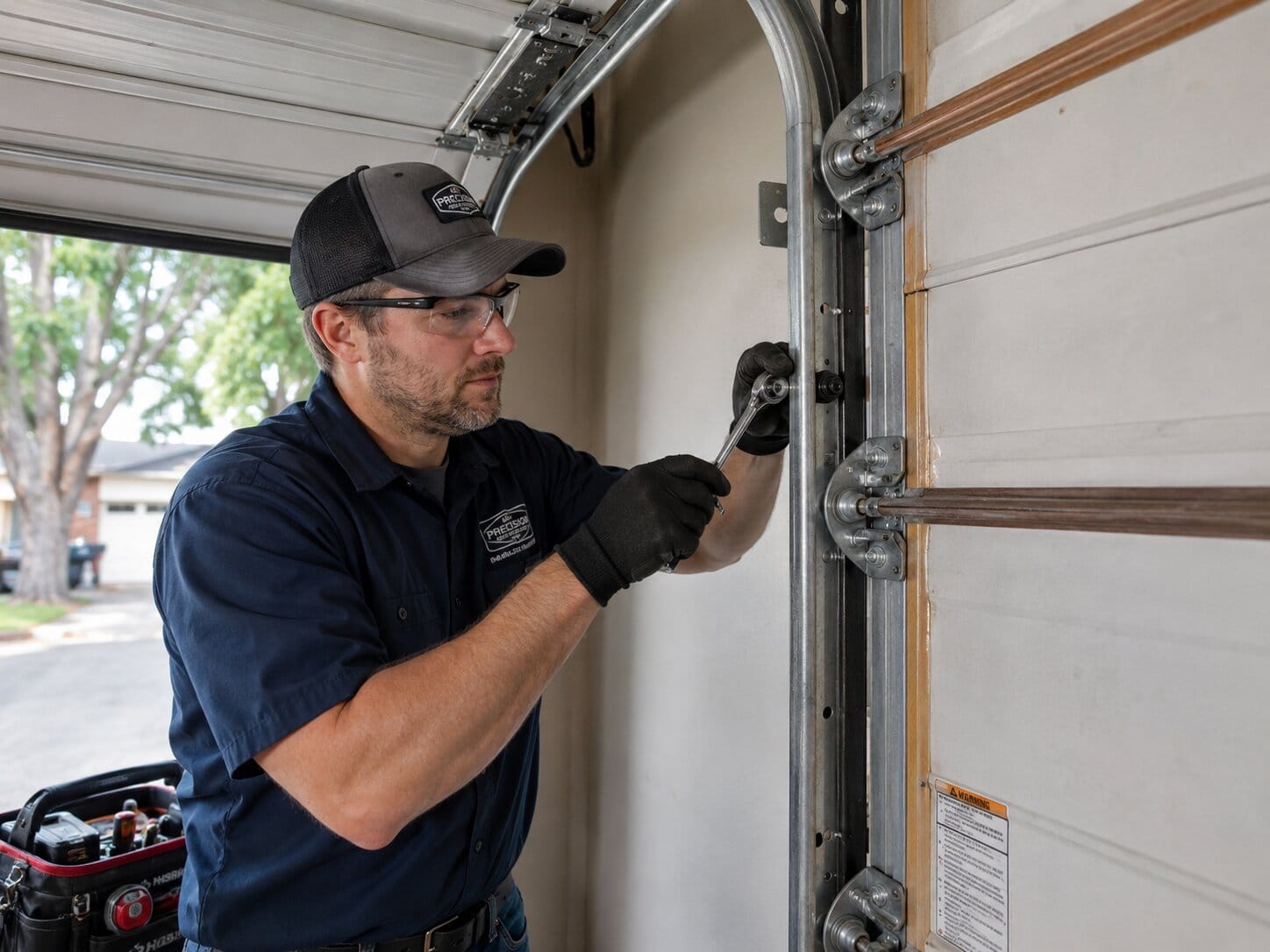
A garage door that has come off track can be frustrating, but it can also be dangerous. A garage door is heavy, moves under tension, and depends on springs, cables, rollers, tracks, brackets, and an opener system working together.
If one part fails, the door may become uneven, jammed, or unstable. Forcing it open or closed can make the damage worse. In some cases, the door can fall, twist, pull a cable loose, bend the track, or damage the opener.
This guide explains what homeowners can safely check, what they should not touch, and when to call a trained garage door technician.
Important Safety Warning
Do not treat an off-track garage door as a simple DIY repair.
Stop using the door immediately if:
- The door is crooked or tilted.
- A cable is loose, frayed, snapped, or off the drum.
- A spring is broken.
- The door feels unusually heavy.
- More than one roller is out of the track.
- The track is badly bent.
- A panel is cracked or damaged.
- The door is hanging, sagging, or jammed.
- The opener keeps trying to move the door.
- You hear grinding, scraping, popping, or snapping sounds.
Do not repair springs, cables, drums, bottom brackets, or tension hardware yourself. These parts can be under high tension and can cause serious injury.
Quick Answer: What Should You Do First?
If your garage door is off track, follow these first steps:
- Stop using the garage door opener.
- Keep people, children, and pets away from the door.
- Do not stand under the door.
- Do not pull loose cables.
- Do not try to adjust springs.
- Do not force the door open or closed.
- Visually inspect the door from a safe distance.
- Call a garage door professional if the door is tilted, heavy, damaged, or unstable.
Small visual checks are safe. Tension repair is not.
What Does “Garage Door Off Track” Mean?
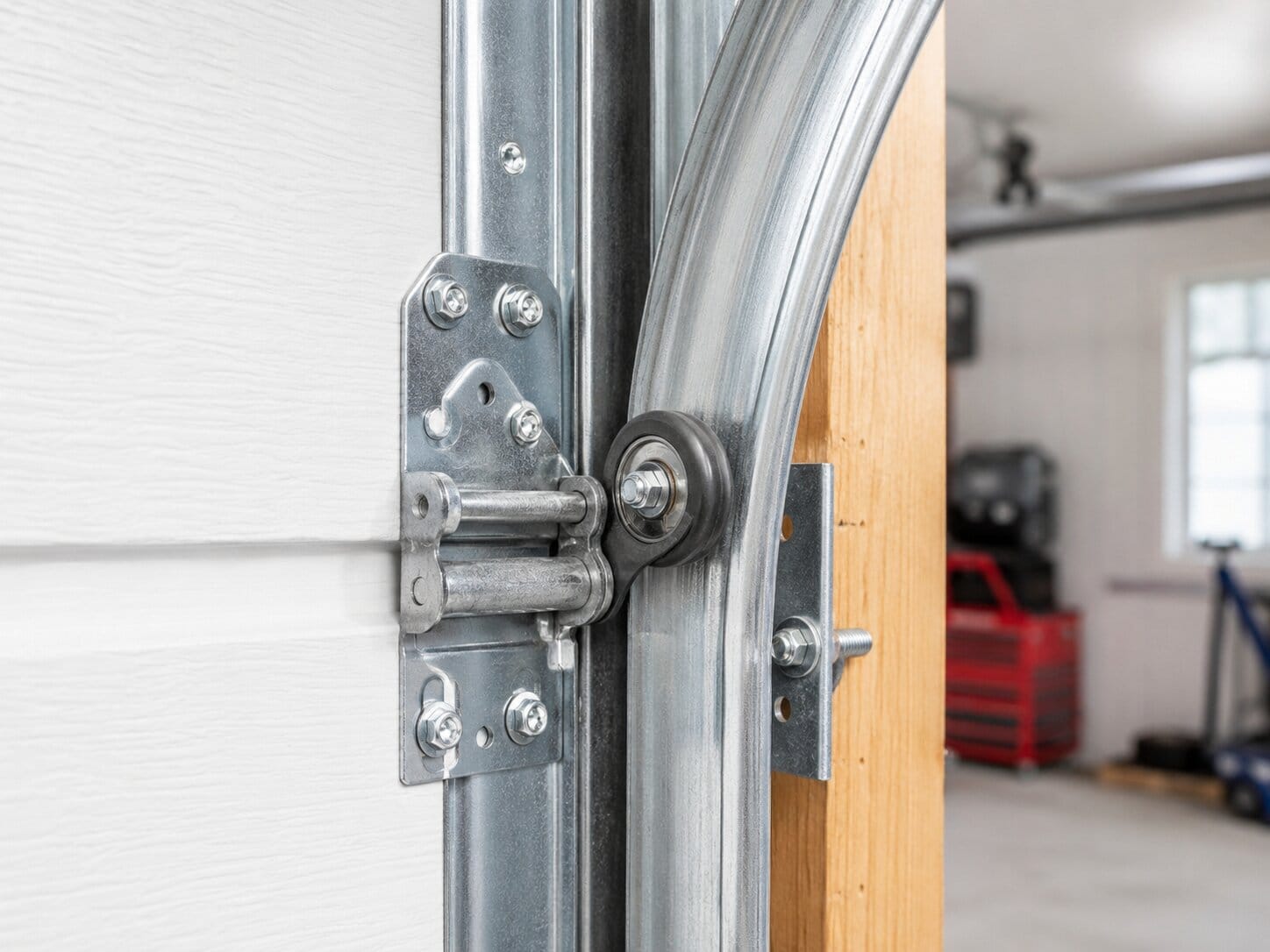
A garage door is off track when one or more rollers no longer sit correctly inside the metal track. The track guides the rollers as the door opens and closes.
When the roller leaves the track, the door may:
- Jam halfway
- Move unevenly
- Tilt to one side
- Scrape against the track
- Refuse to open or close
- Shake during movement
- Make grinding or popping sounds
- Pull against the opener arm
- Bend the track or brackets
An off-track door is a symptom. The real cause may be simple, or it may involve a dangerous tension problem.
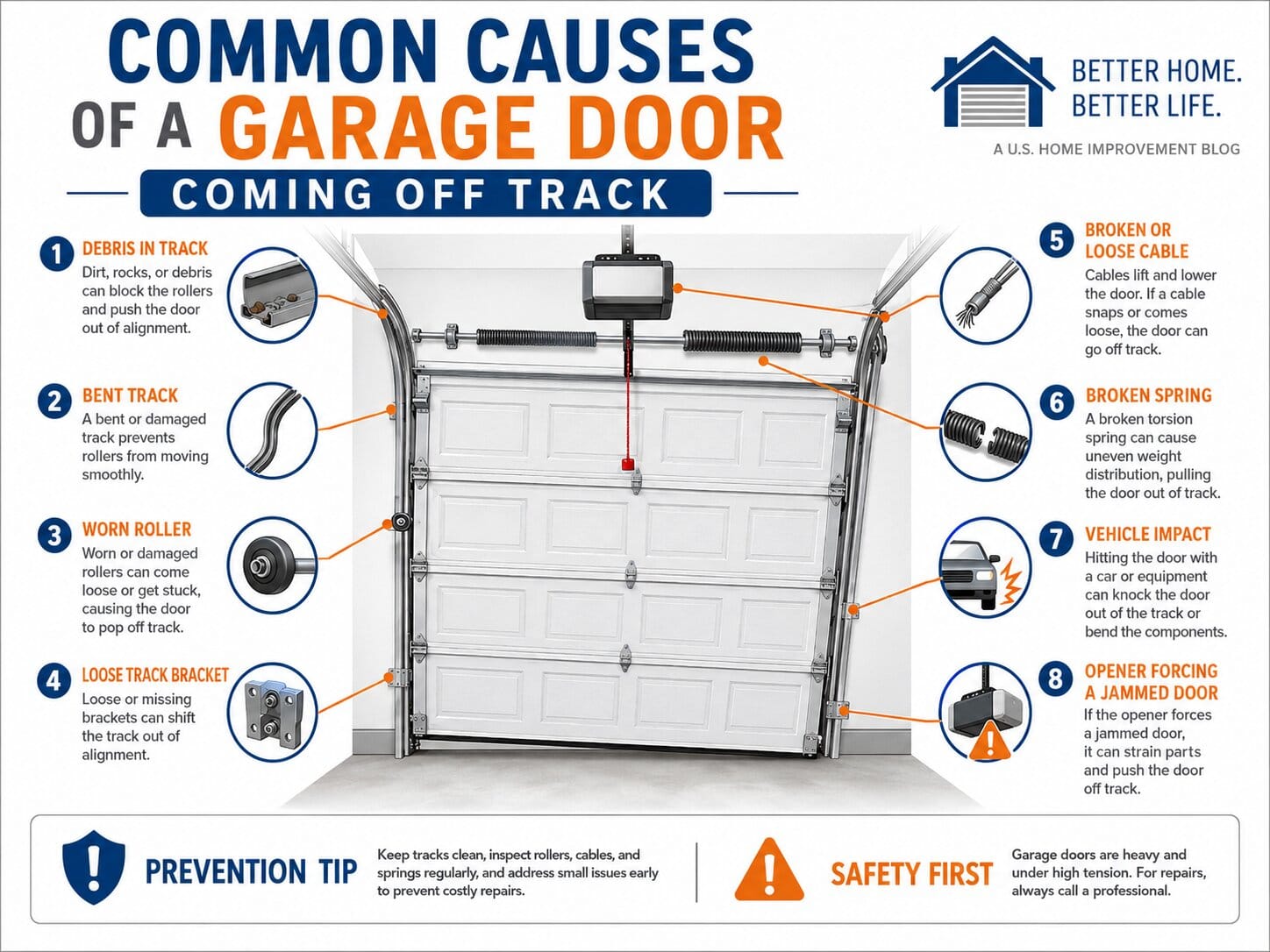
Common Causes of a Garage Door Coming Off Track
1. Track Obstruction
Dirt, small stones, tools, leaves, or debris can block the roller path. This can push a roller out of alignment.
This is one of the safer things homeowners can check.
2. Bent Track
A track can bend from impact, loose hardware, poor alignment, or repeated stress. Even a small bend can stop the roller from moving smoothly.
Do not hammer or bend the track back while the door is under tension or out of position.
3. Worn or Broken Rollers
Rollers wear out over time. A damaged roller can wobble, bind, crack, or come out of the track.
Nylon rollers, steel rollers, and ball-bearing rollers have different wear patterns. A technician can identify whether replacement is needed.
4. Loose Track Brackets
Track brackets hold the track in place. If bolts loosen, the track can shift and cause the door to run unevenly.
Homeowners may visually check for loose visible hardware, but they should not adjust brackets while the door is unstable or under tension.
5. Broken or Loose Cable
Garage door cables help lift and balance the door. If a cable slips, frays, or breaks, the door can become crooked or heavy.
Cable problems are not safe DIY repairs. Call a professional.
6. Broken Spring
Springs counterbalance the weight of the door. If a spring breaks, the door can become extremely heavy and unsafe to move.
Do not operate the door if you suspect a broken spring.
7. Vehicle Impact
A car, bike, lawn equipment, or heavy object can hit the door and push rollers out of the track. Impact damage may also bend panels, brackets, and tracks.
If the door was hit, call a technician before using it again.
8. Opener Force Problems
A garage door opener should not force a jammed or misaligned door to move. If the opener keeps pushing or pulling while the door is off track, it can damage the door and opener.
Disconnect power to the opener or stop using it until the door is inspected.
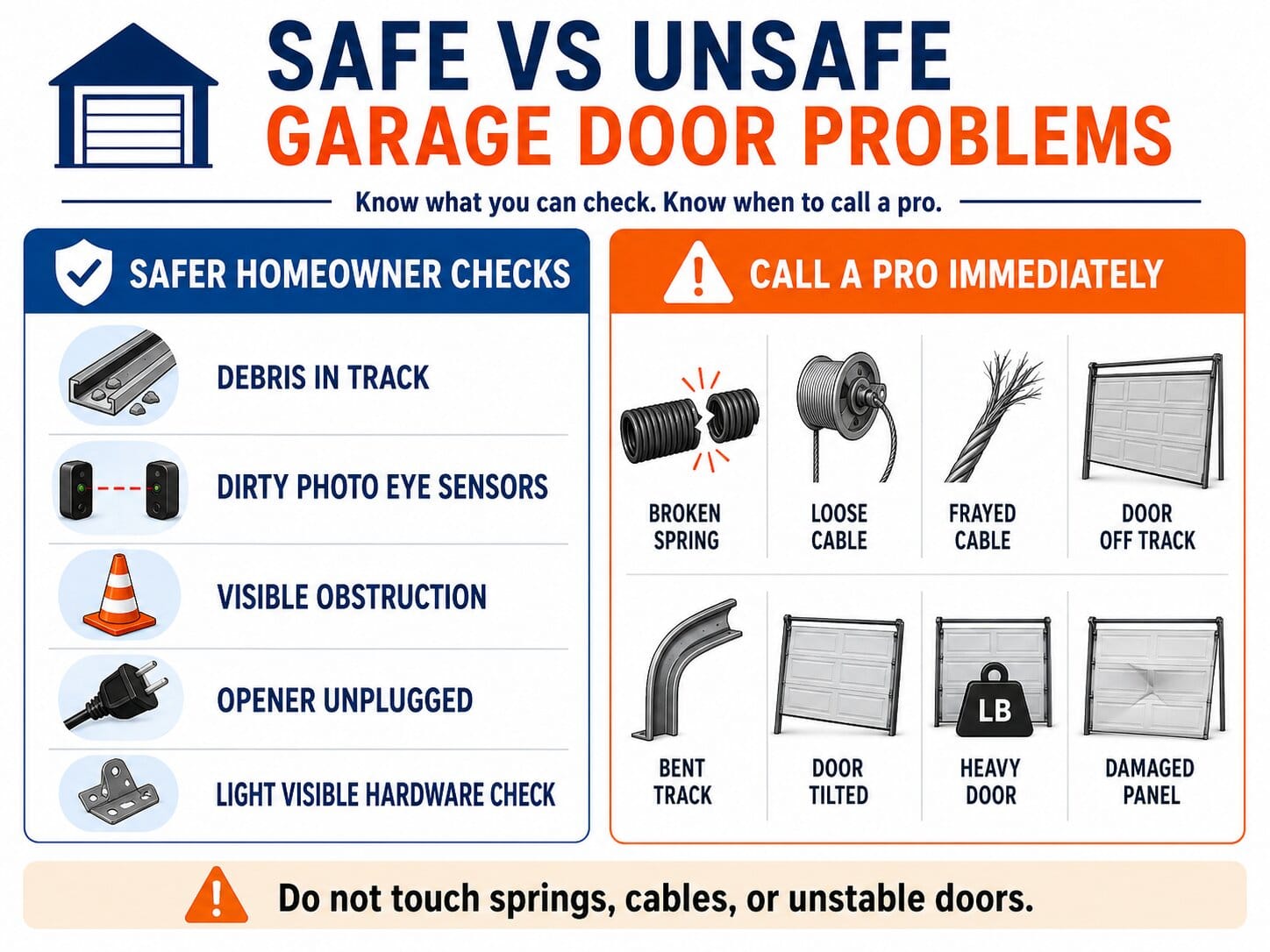
Safe Homeowner Checks
Homeowners can perform basic visual checks without touching tension parts.
Check 1: Look at the Door Position
Stand inside the garage at a safe distance. Look at the door.
Ask:
- Is the door level?
- Is one side lower than the other?
- Is the door stuck halfway?
- Are any rollers outside the track?
- Are any panels bent or cracked?
- Is the opener arm pulling at an angle?
If the door is crooked, sagging, hanging, or jammed, stop and call a professional.
Check 2: Look for Loose or Broken Cables
Look near both sides of the door. Do not touch the cables.
Call a professional if you see:
- Frayed cable strands
- A cable hanging loose
- A cable off the drum
- A cable wrapped unevenly
- A cable that looks snapped
- One side of the door lower than the other
Cable problems can make the door unstable.
Check 3: Look at the Springs
Do not touch the springs.
A torsion spring is usually mounted above the garage door. Extension springs are usually located along the horizontal tracks.
Call a professional if:
- A spring has a visible gap.
- A spring is stretched unevenly.
- A spring is hanging loose.
- You heard a loud bang before the door failed.
- The door suddenly feels heavy.
Spring repair is not a homeowner task.
Check 4: Check for Track Obstructions
If the door is fully closed and stable, look for debris inside the track.
You may remove loose dirt or small objects only if you can do it safely without moving the door, touching cables, or placing your hands near pinch points.
Do not reach around rollers while the door is unstable.
Check 5: Check the Photo Eye Sensors
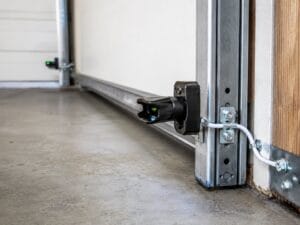
If the door is not closing properly but is still on track, the problem may involve the opener safety sensors.
Photo eye sensors are usually near the bottom of the vertical tracks. They must face each other clearly.
Check whether:
- Something blocks the sensor beam.
- The lenses are dirty.
- The sensors are bumped out of alignment.
- The sensor lights are off or blinking.
- The wires look damaged.
Clean the lenses gently with a soft cloth. Do not bypass the sensors.
If the door is off track, sensor alignment is not the main issue. Stop using the opener and inspect the door first.
Check 6: Listen for Unusual Sounds
Grinding, scraping, popping, or banging can point to roller, track, cable, spring, or opener problems.
If the sound is severe or new, stop using the door until it is inspected.
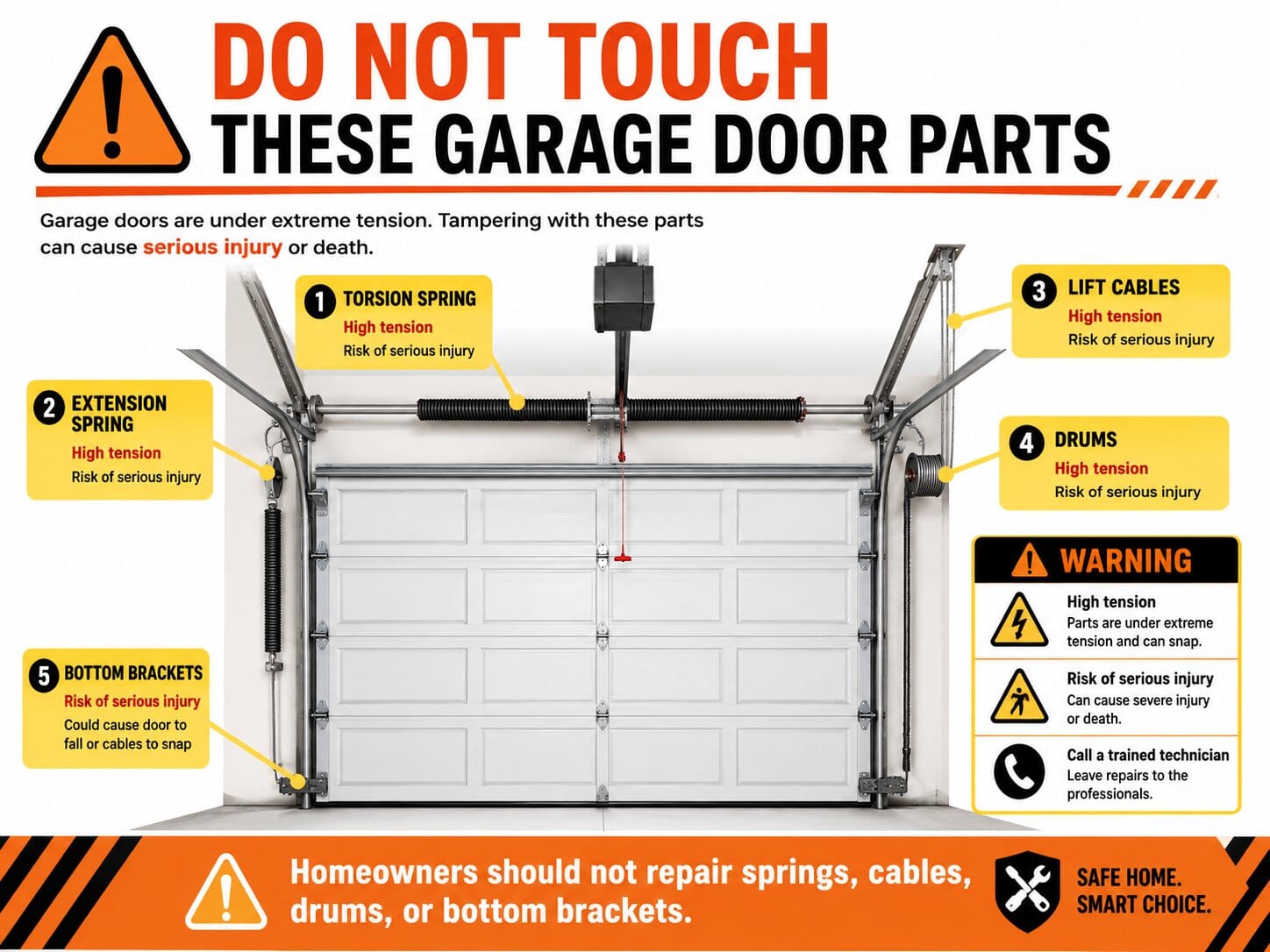
What Not to Do
Do Not Force the Door
Do not push, pull, lift, or force an off-track door. If the door is crooked or stuck, forcing it can make it fall or damage the track.
Do Not Run the Opener
Do not keep pressing the remote or wall button. The opener is not designed to fix a jammed or off-track door.
Do Not Repair Cables
Garage door cables are connected to the spring system. If they are loose, frayed, snapped, or off the drum, call a trained technician.
Do Not Adjust Springs
Torsion springs and extension springs can store high tension. Do not loosen, tighten, remove, or adjust them.
Do Not Bend the Track With the Door Under Load
Do not open the track with pliers or hammer it back while the door is unstable. You can make the alignment worse or release stored force unexpectedly.
Do Not Stand Under the Door
Never stand under a stuck, crooked, or partially open garage door. It may move without warning.
Do Not Bypass Safety Sensors
Photo eye sensors are safety devices. Do not tape them, unplug them, or bypass them to force the door to close.
Should You Use the Emergency Release Cord?
The red cord on many garage door openers is called the emergency release cord. It disconnects the door from the opener carriage.
Use caution.
Do not pull the emergency release cord if:
- The door is partially open.
- The door is crooked.
- The door feels heavy.
- A cable is loose or broken.
- A spring is broken.
- The door is jammed or unstable.
If the door is fully closed and appears stable, the emergency release cord may help disconnect the opener for inspection. However, if you are unsure, call a professional.
A garage door with a broken spring can be dangerously heavy once disconnected from the opener.
Can You Put a Garage Door Back on Track Yourself?
In most off-track cases, the safest answer is no.
A trained garage door technician can safely:
- Secure the door
- Release or control tension if needed
- Inspect springs and cables
- Reset rollers
- Realign tracks
- Replace damaged rollers
- Repair or replace cables
- Check drums and brackets
- Test door balance
- Test opener safety systems
A homeowner can safely check for visible debris, dirty sensors, obvious damage, and unusual sounds. But resetting an off-track garage door often involves heavy moving parts and tension components.
When to Call a Garage Door Technician Immediately
Call a professional if:
- The door is off track.
- A cable is loose, frayed, or broken.
- A spring is broken.
- The door is tilted.
- The door is stuck halfway.
- The door feels too heavy to lift.
- A roller has come out of the track.
- The track is bent.
- A panel is damaged.
- The opener pulled the door at an angle.
- The door fell suddenly.
- The door was hit by a vehicle.
- You are not sure what caused the problem.
If the door is not level, do not try to fix it yourself.
How a Technician Usually Fixes an Off-Track Door
This is a general overview, not a DIY instruction.
A professional may:
- Disconnect the opener safely.
- Secure the door so it cannot fall.
- Inspect the springs and cables.
- Check whether the door is balanced.
- Examine the rollers, hinges, brackets, and tracks.
- Correct track alignment.
- Replace damaged rollers or hardware.
- Reset the door in the track.
- Repair or replace cables if needed.
- Test manual movement.
- Reconnect the opener.
- Test safety reverse and photo eye function.
The exact repair depends on the cause.
Garage Door Lubrication: What to Lubricate and What to Avoid
Lubrication can help a garage door move smoothly, but it must be done correctly.
Lubricate These Parts
Use a garage door lubricant recommended by the door or opener manufacturer.
Common lubrication points include:
- Hinges
- Roller bearings, if the roller type allows it
- Springs, if recommended by manufacturer
- Bearing plates
- Metal pivot points
- Locking hardware, if applicable
Do Not Grease the Track
The track should usually be clean, not greasy. A greasy track can collect dust, grit, and debris. This can make roller movement worse.
Wipe the inside of the track with a clean cloth if it is dirty. Do not coat the track with heavy grease.
Avoid Using the Wrong Product
WD-40 is often misunderstood. Standard WD-40 is mainly a water-displacing product, not a long-lasting garage door lubricant. Use a product made for garage doors or follow the manufacturer’s manual.
Safety Sensor and Auto-Reverse Checks
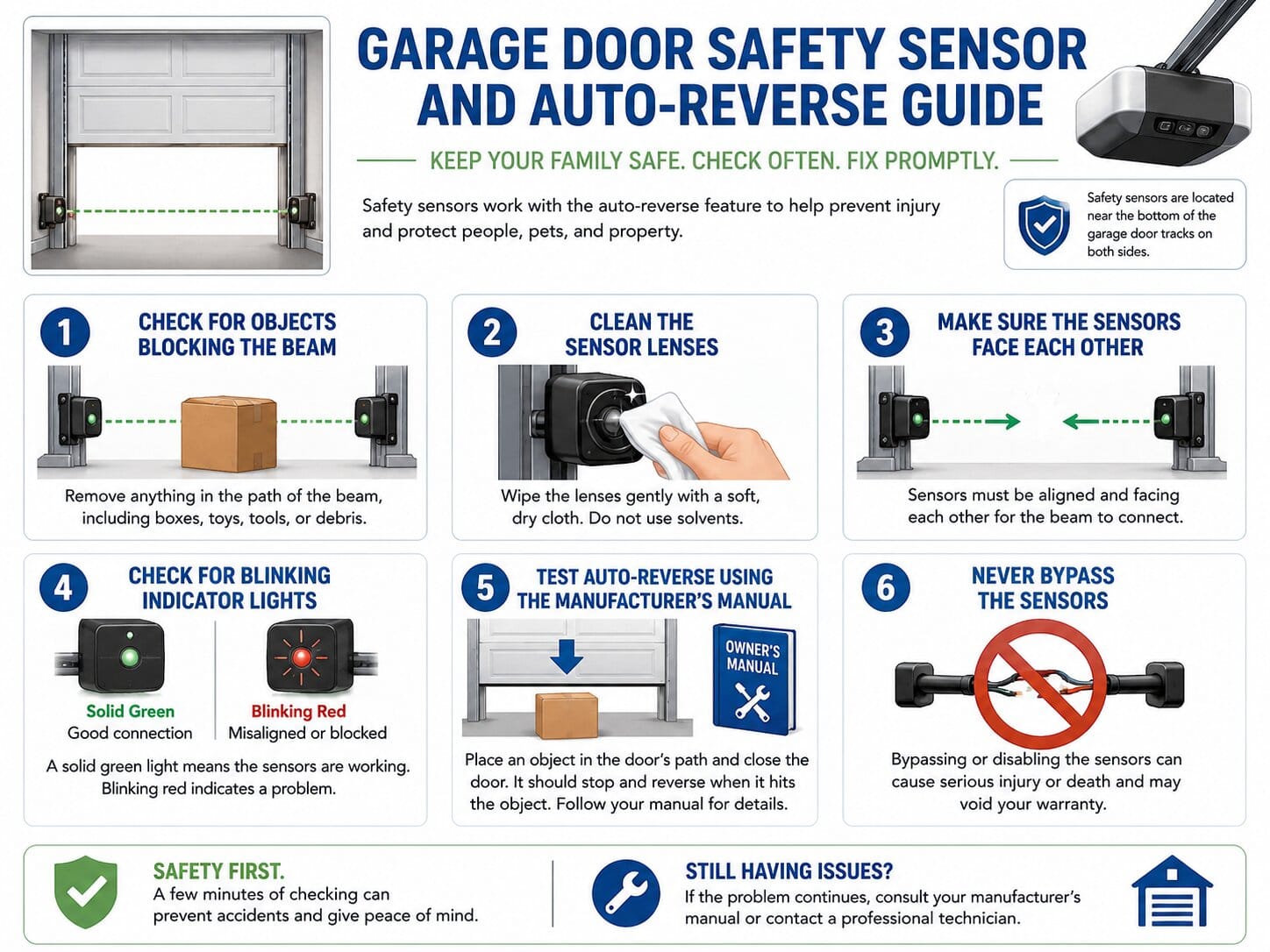
Modern garage door openers use safety features to reduce entrapment risk. These may include photo eye sensors and an automatic reversing system.
Homeowners should check these safety features regularly.
Photo Eye Sensor Check
- Make sure the sensors face each other.
- Clean the lenses.
- Remove objects blocking the beam.
- Look for damaged wires.
- Check indicator lights.
- Do not bypass the sensors.
Auto-Reverse Check
Follow the opener manufacturer’s manual for testing the auto-reverse system. If the door does not reverse correctly, stop using the opener and call a professional.
A garage door opener with failed safety features should not be used.
Basic Maintenance Schedule
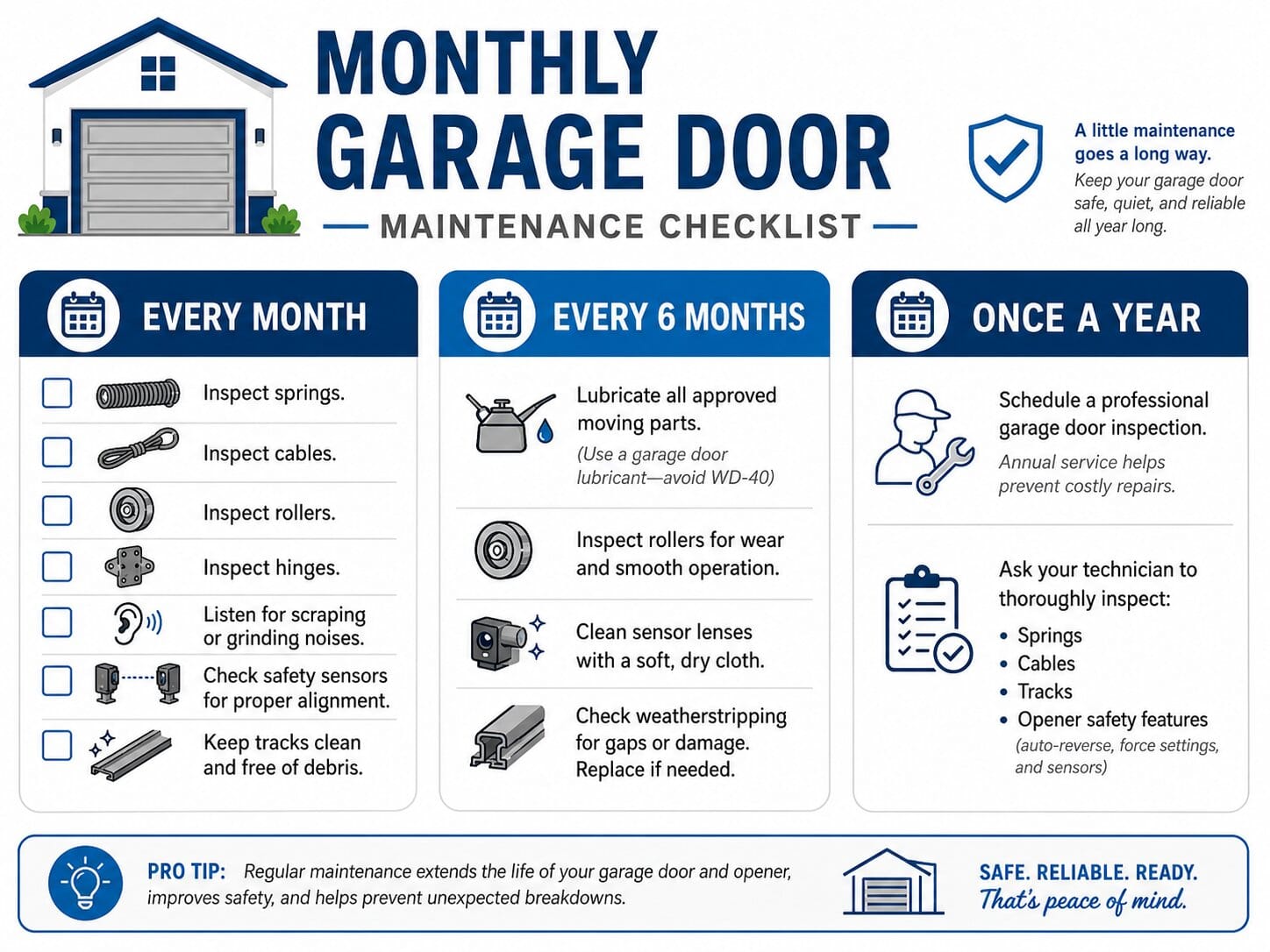
Monthly
- Look at springs, cables, rollers, pulleys, and hinges.
- Listen for grinding or scraping.
- Check photo eye sensors.
- Look for loose visible hardware.
- Check whether the door moves smoothly.
- Keep the track clean.
Every 6 Months
- Lubricate approved moving parts.
- Check weatherstripping.
- Inspect rollers for wear.
- Check door balance if you know the safe method from the manual.
- Clean the sensor lenses.
Once a Year
- Schedule a professional inspection if the door is old, heavy, noisy, used daily, or has had previous repairs.
- Ask the technician to inspect springs, cables, rollers, tracks, hinges, opener settings, and safety systems.
How to Prevent a Garage Door From Coming Off Track
You can reduce risk by following these habits:
- Do not hit the door with a vehicle or equipment.
- Keep objects away from the tracks.
- Keep children away from moving doors.
- Do not hang items on the tracks.
- Do not ignore grinding or scraping sounds.
- Replace worn rollers before they fail.
- Keep cables inspected by a professional.
- Test opener safety features.
- Do not force a stuck door.
- Schedule maintenance if the door moves unevenly.
Common Mistakes to Avoid
Mistake 1: Forcing the Door Closed
This can bend tracks, damage rollers, break cables, or damage the opener.
Mistake 2: Pulling a Loose Cable
A loose cable may still be connected to spring tension. Do not touch it.
Mistake 3: Adjusting the Spring
Spring adjustment is dangerous and should be handled by trained technicians.
Mistake 4: Hammering the Track Back Into Shape
Track alignment affects safe door movement. Poor repair can cause repeated failure.
Mistake 5: Using the Opener as a Repair Tool
The opener should move a working door. It should not force a damaged door.
Mistake 6: Greasing the Track
The track should be clean. Lubricate appropriate moving parts instead.
Mistake 7: Ignoring Sensor Problems
Photo eye sensors and auto-reverse systems protect people, pets, and property.
Mistake 8: Treating All Garage Doors the Same
Garage doors vary by spring type, weight, opener type, track design, panel material, and age. One repair method does not fit every door.
FAQ About Garage Doors Off Track
Why did my garage door come off track?
Common causes include impact damage, debris in the track, worn rollers, loose brackets, bent track, broken cables, broken springs, or opener force problems.
Is it safe to put a garage door back on track myself?
Usually no. An off-track garage door can be heavy and unstable. If cables, springs, rollers, or tracks are involved, call a trained technician.
Can I use the opener if the door is off track?
No. Stop using the opener until the door is inspected. Running the opener can make the damage worse.
What should I do first if my garage door comes off track?
Stop using the door, keep people away, inspect visually from a safe distance, and call a professional if the door is tilted, stuck, heavy, or damaged.
Can a dirty track cause the door to come off track?
Yes, debris or obstruction can affect roller movement. If the door is fully closed and stable, you can remove loose debris safely. Do not reach near rollers on an unstable door.
Can I repair a garage door cable myself?
No. Garage door cables are connected to the spring system and can be dangerous. Cable repair should be handled by a trained technician.
How do I know if my garage door spring is broken?
Signs include a loud bang, a visible gap in the torsion spring, a very heavy door, uneven movement, or a door that will not lift properly. Do not operate the door until it is repaired.
Are photo eye sensors the same as track problems?
No. Photo eye sensors affect opener safety and closing behavior. Track problems involve the physical path of the rollers and door.
Should I lubricate the garage door track?
Usually no. Keep the track clean. Lubricate hinges, roller bearings, springs, and approved moving parts according to the manufacturer’s instructions.
What lubricant should I use?
Use a garage door lubricant recommended by the door or opener manufacturer. Avoid heavy grease on the track.
Can I pull the emergency release cord?
Only with caution. Do not pull it if the door is open, crooked, heavy, jammed, or has a cable or spring problem.
How often should I inspect my garage door?
A monthly visual inspection is a good practice. Look at springs, cables, rollers, pulleys, hinges, and tracks. Listen for unusual sounds.
When should I replace rollers?
Replace rollers when they are cracked, worn, noisy, wobbling, or not moving smoothly. A technician can confirm the correct roller type.
Can a garage door fall if it is off track?
Yes. A crooked, unstable, or partially open garage door can move or fall unexpectedly. Stay clear and call a professional.
How much does off-track garage door repair cost?
Cost depends on the cause, damage, door type, parts needed, labor rates, and whether springs or cables are involved. Get a written estimate before approving repair.
Conclusion
A garage door that has come off track should be taken seriously. It may look like a simple roller problem, but the cause can involve cables, springs, tracks, brackets, panels, or the opener.
Homeowners can safely perform basic visual checks, remove obvious debris when the door is fully closed and stable, clean photo eye sensors, and stop using the opener. They should not repair springs, cables, drums, bottom brackets, or unstable off-track doors.
The safest rule is simple: if the door is crooked, heavy, stuck, damaged, noisy, or has any cable or spring issue, call a trained garage door technician.
A safe repair protects the door, the opener, the home, and everyone who uses the garage.
Sources:
- International Door Association, “Care & Maintenance”
Used for monthly visual inspection guidance covering springs, cables, rollers, pulleys, hinges, and the recommendation to contact a trained service technician when something does not look or sound right. (Doors) - International Door Association, “Consumer Resources”
Used for homeowner safety guidance: look at springs, cables, and rollers, listen for grinding or scraping, keep hands away from moving door sections, and contact a trained garage door professional when concerns appear. (Doors) - DASMA, “Garage Doors Safety Tips”
Used for the warning that frayed or worn cables can break and should be replaced only by a trained technician because of high spring tension. (DASMA) - DASMA, “Safety Tips”
Used for extension spring safety cable context and the warning that extension springs are under high tension when the door is down. (DASMA) - U.S. Consumer Product Safety Commission, “Final Rules for Automatic Garage Door Openers”
Used for the 1993 residential garage door opener entrapment protection requirement context. (U.S. Consumer Product Safety Commission) - UL Standards & Engagement, “Automatic Garage Door Standards”
Used for the explanation that residential garage door operators must include entrapment protection such as photo eye sensors, edge sensors, or equivalent devices. (UL Standards & Engagement)


 Shery
Shery