The Effects of Mixing Styrofoam and Gasoline: A Comprehensive Guide

The combination of Styrofoam and gasoline has long been a topic of curiosity for many.
What happens when these two substances are mixed? Is it safe to do so?
In this article, we will delve into the chemical reactions and potential hazards that occur when Styrofoam and gasoline are combined.
By understanding the science behind this mixture, we can make informed decisions about handling these materials.
What is Styrofoam?
Before we explore the effects of mixing Styrofoam and gasoline, let’s first clarify what Styrofoam actually is.
Styrofoam is a brand name for DuPont’s insulation board. However, in the construction industry, Styrofoam is commonly referred to as extruded polystyrene foam or XPS.
It is essential to distinguish between Styrofoam and Styropor (a trademark of the German chemical company BASF AG), which is an expanded polystyrene foam.
Why Does Styrofoam Dissolve in Gasoline?
Styrofoam, or polystyrene, shares a similar molecular structure to that of gasoline.
Both substances contain polycyclic aromatic hydrocarbons (PAHs), which are organic compounds found in coal, crude oil, and gasoline.
The principle of “like dissolves like” explains why Styrofoam can break down when mixed with gasoline.
The similar molecular structures of polystyrene and gasoline allow their hydrocarbons to interact freely, resulting in the degradation of the plastic material.
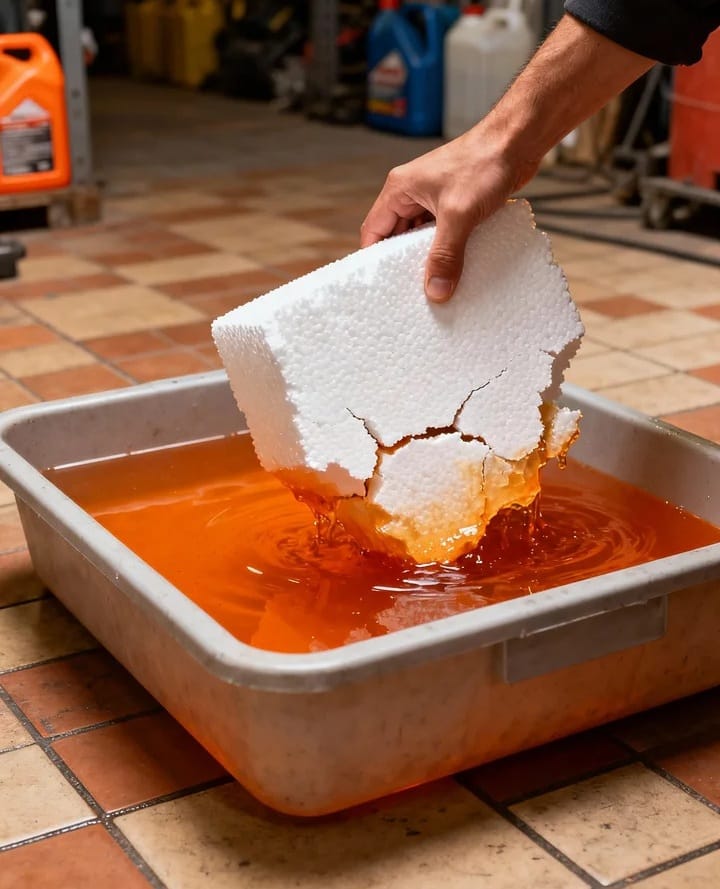
When Styrofoam is placed in gasoline, the high-energy bonds in the aromatic chain of polystyrene break, leading to the release of trapped air.
This chemical reaction transforms the Styrofoam into a gelatinous and sticky substance. If left to dry, the mixture solidifies again, resembling a material closely resembling plastic.
Is It Dangerous to Mix Gasoline and Styrofoam?
Mixing gasoline and Styrofoam can be extremely hazardous. Both substances, even on their own, pose health and safety risks.
Burning polystyrene, such as Styrofoam, releases large amounts of carbon monoxide, styrene, and other toxic chemicals.
Short-term or long-term exposure to these poisonous fumes can result in various health problems, including blood and kidney issues, coughing, depression, dizziness, fatigue, headache, nausea, and weakness.
Gasoline fumes, when inhaled, can cause dizziness, fainting, headaches, irritation of the eyes, throat, and nose, nausea, and even death in cases of high-level inhalation.
It is crucial to exercise caution when handling both gasoline and Styrofoam to avoid adverse health effects.
Potential Fire Hazards
Combining two highly flammable materials, such as gasoline and Styrofoam, can have dangerous consequences.
When the correct ratio is achieved, it is possible to create a homemade torch or firebomb.
This mixture is similar to napalm, a highly incendiary substance that can burn at temperatures exceeding 5,000°F (2,760°C).
Napalm can cause severe burns and should never be created or used outside of controlled and authorized settings.
Attempting to create a homemade torch or firebomb using gasoline and Styrofoam is illegal and poses significant risks to personal safety, property, and others.
It is crucial to handle these substances responsibly and avoid any actions that could lead to accidents or harm.
The Dangers of Using Styrofoam and Gasoline as a Roof Sealant
In search of a cost-effective alternative to commercial roof sealants, some individuals have considered using Styrofoam and gasoline.
However, this is not recommended due to several reasons.
Firstly, the mixture of Styrofoam and gasoline can be highly flammable, increasing the risk of fire hazards.
Secondly, the alternative sealant made from this combination may not withstand harsh weather conditions and can quickly deteriorate, potentially causing roof damage.
Commercial roof sealants are the safer and more reliable choice for sealing roofs.
Acrylic roof sealants, in particular, offer a cost-effective option, with prices ranging from $0.15 to $0.75 per square foot.
It is advisable to consult with a professional roofer or hardware store representative for recommendations on the best sealant for specific roofing needs.
Alternative Substances to Dissolve Styrofoam
If you are looking for substances to dissolve Styrofoam, there are a few alternatives to consider.
Acetone, a commonly used solvent in plastics production and nail polish removers, is highly effective in dissolving polystyrene.
Other options include oils such as canola oil, fish oil, and olive oil, as well as certain essential oils like bay, eucalyptus, lemon rinds, rosemary, and thyme.
These substances contain volatile hydrocarbons that can break down the polystyrene molecules in Styrofoam, causing it to collapse.
It is important to exercise caution when working with these substances and to consider the potential risks associated with their use.
Always follow proper safety precautions and dispose of any dissolved Styrofoam materials responsibly.
Conclusion
When Styrofoam and gasoline are mixed, a chemical reaction occurs that breaks down the plastic material and releases trapped air. This results in the formation of a sticky and gelatinous substance resembling plastic.
However, the combination of gasoline and Styrofoam can be highly dangerous. Both substances pose health and safety risks on their own, and combining them can lead to fire hazards and severe health issues.
It is essential to handle gasoline and Styrofoam responsibly and avoid any actions that could result in accidents or harm.
When it comes to roof sealing, commercial sealants are the recommended choice due to their reliability and ability to withstand harsh weather conditions.
If you need to dissolve Styrofoam, alternative substances like acetone, oils, and certain essential oils can be effective, but caution must be exercised when working with these materials.
By understanding the effects and potential dangers of mixing Styrofoam and gasoline, we can make informed decisions and prioritize safety in our interactions with these substances.


 Shery
Shery