Roof Joist vs Rafter vs Truss: Understanding the Differences
When it comes to the construction industry, terms like roof joist, rafter, and truss are commonly used.
But what exactly do these terms mean, and how do they differ from one another?
In this comprehensive guide, we’ll delve into the world of roof joists, rafters, and trusses, exploring their functions, materials, and unique characteristics.
By the end, you’ll have a clear understanding of the key differences between these crucial components of a roof.
Roof Joists: Horizontal Support Beams

Let’s start with roof joists. These are horizontal support beams that run parallel to the top edge of the roof.
Their primary function is to bear the weight of the roof load and transfer it to the walls of the structure.
Roof joists can be made of either wood or metal, and they are attached to the rafters, which in turn are attached to the walls or ceiling of the building.
Proper spacing of roof joists is essential to ensure adequate support for the roof and prevent structural issues such as leakage.
The most common spacing for roof joists is 16 inches on-center, but this can vary depending on the size and span of the roof.
Rafters: Creating the Roof’s Slope
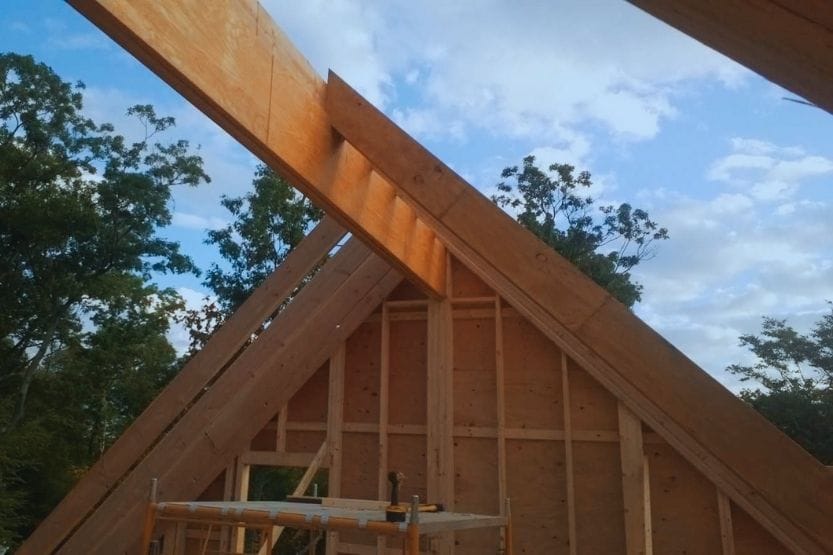
Moving on to rafters, these are structural beams that create the slope of the roof on a building.
Rafters run parallel to each other and support the weight of the roof. They are usually made from two pieces of wood combined with screws or nails.
Each rafter extends from the roof’s peak to the wall plate or barge board at the edge of the building.
Some roofs may also have a ridge beam, which rests on top of the rafters and provides additional strength. In traditional roof framing, rafters play a vital role.
A typical rafter consists of various components, including the common rafter, ridge board, plumb cut, birdsmouth cut, collar tie, double top plates, ceiling joist, wall stud, and tail cut.
The size and thickness of the rafters depend on the specific requirements of the roof.
Insulation is typically placed between the rafter boards and the drywall in a finished space, while in an unfinished space like an attic, insulation is installed between the joists.
Trusses: Structural Units for Roof Support

Now, let’s explore trusses. Trusses are structural members that form triangular units used to support the roof.
They can be constructed from wood, steel, or aluminum. Trusses come in various types, each with its unique design and purpose.
Some common types of trusses include:
- King Post Truss: This truss has a single vertical post or beam that connects the top and bottom chords. It is often used in small buildings like sheds or gazebos.
- Queen Post Truss: Featuring two diagonal members connecting the top corners of the vertical posts, this truss is suitable for larger roofs in barns or warehouses.
- Pratt Truss: Pratt trusses are commonly used in long buildings such as factories or train stations. They have diagonal members that slope down from the left to the right side of the truss.
- Warren Truss: The Warren truss, patented in 1846, is a metal truss frequently used in bridge and building construction. It consists of equilateral triangles formed by identical panel lengths and diagonals.
- Howe Truss: Invented by William Howe in 1840, the Howe truss is the reverse of the Pratt truss. It provides structural stability by turning the diagonal braces in the opposite direction.
Unlike rafters, trusses are prefabricated before being brought to the construction site.
Due to their triangular webbing, trusses offer excellent strength and stability while reducing the number of joints and connections required.
This makes them a popular choice in new construction projects, where efficiency and speed are crucial.
Roof Joist vs Rafter vs Truss: Comparing the Key Differences
Now that we have explored the individual characteristics of roof joists, rafters, and trusses, let’s summarize the key differences between these components:
| Roof Joists | Rafters | Trusses |
|---|---|---|
| Horizontal support beams | Create the slope of the roof | Structural units for roof support |
| Run parallel to the roof’s top edge | Connect the ends of two adjacent joists | Form triangular units |
| Bear the weight of the roof load | Support the roof’s weight | Provide strength and stability |
| Can be made of wood or metal | Made from wood | Constructed from wood, steel, or aluminum |
| Attached to rafters and walls | Extend from the roof’s peak to the wall plate | Prefabricated before installation |
Pros and Cons of Roof Joists, Rafters, and Trusses
Now that we understand the basic differences between roof joists, rafters, and trusses, let’s explore the pros and cons of each component to help you make an informed decision for your roofing needs.
Roof Joists
Pros:
- Provide horizontal support and distribute roof load effectively.
- Can be made of wood or metal, offering flexibility in material selection.
- Suitable for various roof types and sizes.
- Can be spaced at 16 inches on-center, providing adequate support for most roofs.
- Ideal for construction in hard-to-reach areas due to on-site construction.
Cons:
- May be more expensive than trusses, especially when considering labor and material costs.
- Construction may take longer, especially in adverse weather conditions.
Rafters
Pros:
- Create additional space in your home, allowing for the conversion of attics or the creation of vaulted ceilings.
- Ideal for last-minute projects, as they can be built on-site without the need for pre-fabrication.
- Suitable for construction in difficult-to-reach areas, with flexible material transport methods.
Cons:
- May be more expensive than trusses, especially when considering labor and material costs.
- Construction may take longer, especially in adverse weather conditions.
- Less adaptable compared to trusses, limiting options for utilizing the space above and below.
Trusses
Pros:
- Possess greater strength and span capabilities compared to rafters.
- Easy to assemble, with clear instructions and numbered components.
- Cost-effective, with prefabricated truss packages being 30-50% cheaper than on-site rafter construction.
- Fabrication in a controlled environment ensures superior accuracy.
- Provide efficient load distribution due to fewer joints and connections.
Cons:
- Assembled trusses can be massive and require special transportation methods.
- Less adaptable compared to rafters, limiting the potential use of the space above and below the truss roof.
Roof Joist vs Rafter vs Truss: Cost Comparison
When it comes to cost, trusses are generally more affordable than rafters.
Prefabricated truss packages can be 30-50% cheaper than the materials and labor expenses associated with on-site rafter construction.
This cost advantage has contributed to the increasing popularity of trusses in the past few decades.
If cost is a significant consideration for your roofing project, trusses are often the recommended option.
Conclusion
In conclusion, understanding the differences between roof joists, rafters, and trusses is crucial for anyone involved in the construction industry or planning a roofing project.
While roof joists provide horizontal support, rafters create the slope of the roof, and trusses offer structural support in the form of triangular units.
Each component has its pros and cons, and the choice between them depends on various factors such as cost, construction timeline, and the desired use of the space.
By considering these factors and consulting with professionals, you can make an informed decision that meets your specific roofing needs.

 Shery
Shery